Summary

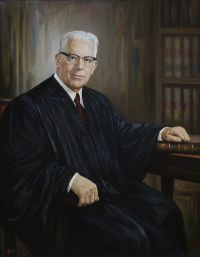
Portrait of Earl Warren Earl Warren Benanti v. United States — Opinion of the Court

Respondents argue that the evidence obtained from the disclosed wiretap should have been admissible by referring to Schwartz v. State of Texas, supra, and by drawing a parallel to the Fourth Amendment. It is urged that as long as the wiretapping occurred without the participation or even knowledge of federal law-enforcement officers, the evidence should be admitted in federal court; the Federal Government, being without fault, should not be handicapped.
Source: Wikisource

Portrait of Earl Warren Earl Warren Benanti v. United States — Opinion of the Court

The Federal Communications Act is a comprehensive scheme for the regulation of interstate communication. [13] In order to safeguard those interests protected under Section 605, that portion of the statute pertinent to this case applies both to intrastate and to interstate communications. Weiss v. United States, supra. The natural result of respondent's argument is that both interstate and intrastate communication would be removed from the statute's protection because, as this Court noted in Weiss, [14] the intercepter cannot discern between the two and will listen to both.
Source: Wikisource

Portrait of Earl Warren Earl Warren Benanti v. United States — Opinion of the Court

In this case the statute was violated if not earlier at least upon the disclosure to the jury of the existence of the intercepted communication, [4] for Section 605 forbids the divulgence of 'the existence, contents, substance, purport, effect, or meaning' of the intercepted message. The effect of that violation in contributing to the conviction here is manifest. The jury were free to speculate that the existence of the communication, the source of the Government's evidence, was further proof of petitioner's criminal activities.
Source: Wikisource

Get perspective with Kwize: daily news enlightened by great literature