Summary

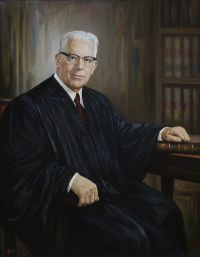
Portrait of Earl Warren Earl Warren Rathbun v. United States — Opinion of the Court

And so, a secretary is fairly to be deemed as much of an automatic instrument in the context of our problem as a tape recorder. Surely a police officer called in to facilitate the detection of crime is not such an alter ego. His participation in telephone communications when not authorized by the sender occupies precisely the same position that it occupied in the Olmstead case when this Court sanctioned the practice, and in the Nardone cases where this Court rigorously enforced the prohibition by Congress of what theretofore was a lawful practice.
Source: Wikisource

Portrait of Earl Warren Earl Warren Rathbun v. United States — Opinion of the Court

It is unreasonable to believe that Congress meant to extend criminal liability to conduct which is wholly innocent and ordinary.
Common experience tells us that a call to a particular telephone number may cause the bell to ring in more than one ordinarily used instrument. Each party to a telephone conversation takes the risk that the other party may have an extension telephone and may allow another to overhear the conversation.
Source: Wikisource

Portrait of Earl Warren Earl Warren Rathbun v. United States — Opinion of the Court

The telephone extension is a widely used instrument of home and office, [6] yet with nothing to evidence congressional intent, petitioner argues that Congress meant to place a severe restriction on its ordinary use by subscribers, denying them the right to allow a family member, an employee, a trusted friend, or even the police to listen to a converation to which a subscriber is a party.
Source: Wikisource

Get perspective with Kwize: daily news enlightened by great literature