Summary

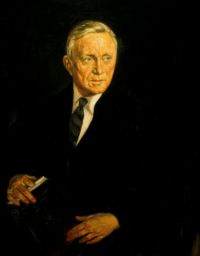
Portrait of William O. Douglas William O. Douglas Terminiello v. Chicago — Opinion of the Court

There is no room under our Constitution for a more restrictive view. For the alternative would lead to standardization of ideas either by legislatures, courts, or dominant political or community groups.
The ordinance as construed by the trial court seriously invaded this province. It permitted conviction of petitioner if his speech stirred people to anger, invited public dispute, or brought about a condition of unrest. A conviction resting on any of those grounds may not stand.
Source: Wikisource

Portrait of William O. Douglas William O. Douglas Terminiello v. Chicago — Opinion of the Court

The vitality of civil and political institutions in our society depends on free discussion. As Chief Justice Hughes wrote in De Jonge v. Oregon, 299 U.S. 353, 365, 57 S.Ct. 255, 260, 81 L.Ed. 278, it is only through free debate and free exchange of ideas that government remains responsive to the will of the people and peaceful change is effected. The right to speak freely and to promote diversity of ideas and programs is therefore one of the chief distinctions that sets us apart from totalitarian regimes.
Source: Wikisource

Get perspective with Kwize: daily news enlightened by great literature