Summary

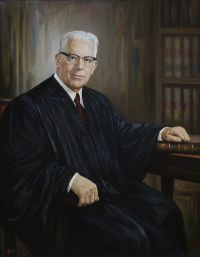
Portrait of Earl Warren Earl Warren Brown v. Board of Education of Topeka… (1954)

It ordains that no State shall deprive any person of life, liberty, or property, without due process of law, or deny to any person within its jurisdiction the equal protection of the laws. What is this but declaring that the law in the States shall be the same for the black as for the white; that all persons, whether colored or white, shall stand equal before the laws of the States, and, in regard to the colored race, for whose protection the amendment was primarily designed, that no discrimination shall be made against them by law because of their color?
Source: Wikisource

Portrait of Earl Warren Earl Warren Brown v. Board of Education of Topeka… (1954)

In these days, it is doubtful that any child may reasonably be expected to succeed in life if he is denied the opportunity of an education. Such an opportunity, where the state has undertaken to provide it, is a right which must be made available to all on equal terms.
We come then to the question presented: Does segregation of children in public schools solely on the basis of race, even though the physical facilities and other "tangible" factors may be equal, deprive the children of the minority group of equal educational opportunities? We believe that it does.
Source: Wikisource

Get perspective with Kwize: daily news enlightened by great literature