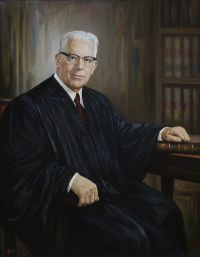
 Earl Warren,
Brown v. Board of Education of Topeka…
(1955)
Earl Warren,
Brown v. Board of Education of Topeka…
(1955)
“ All provisions of federal, state, or local law requiring or permitting such discrimination must yield to this principle. ”
Earl Warren,
Brown v. Board of Education of Topeka…
(1955)
“ All provisions of federal, state, or local law requiring or permitting such discrimination must yield to this principle. ”
Earl Warren,
Brown v. Board of Education of Topeka…
(1955)
“ The judgments below, except that, in the Delaware case, are accordingly reversed, and the cases are remanded to the District Courts to take such proceedings and enter such orders and decrees consistent with this opinion as are necessary and proper to admit to public schools on a racially nondiscriminatory basis with all deliberate speed the parties to these cases. ”
Earl Warren,
Brown v. Board of Education of Topeka…
(1955)
“ In fashioning and effectuating the decrees, the courts will be guided by equitable principles. Traditionally, equity has been characterized by a practical flexibility in shaping its remedies [4] and by a facility for adjusting and reconciling public and private needs. [5] These cases call for the exercise of these traditional attributes of equity power. At stake is the personal interest of the plaintiffs in admission to public schools as soon as practicable on a nondiscriminatory basis. ”
