Summary

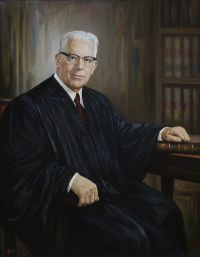
Portrait of Earl Warren Earl Warren Richards v. United States — Opinion of the Court

First, our interpretation enables the federal courts to treat the United States as a 'private individual under like circumstances,' and thus is consistent with the Act considered as a whole. [23] The general conflict-of-laws rule, followed by a vast majority of the States, [24] is to apply the law of the place of injury to the substantive rights of the parties. Therefore, where the forum State is the same as the one in which the act or omission occurred, our interpretation will enable the federal courts to treat the United States as an individual would be treated under like circumstances.
Source: Wikisource

Portrait of Earl Warren Earl Warren Richards v. United States — Opinion of the Court

Nor are we persuaded to require such an independent federal rule by the petitioners' argument that there are other instances, specifically set forth in the Act, [28] where the liability of the United States is not coextensive with that of a private person under state law. It seems sufficient to note that Congress has been specific in those instances where it intended the federal courts to depart completely from state law and, also, that this list of exceptions contains no direct or indirect modification of the principles controlling application of choice-of-law rules.
Source: Wikisource

Portrait of Earl Warren Earl Warren Richards v. United States — Opinion of the Court

And, because the issue of the applicable law is controlled by a formal expression of the will of Congress, we need not pause to consider the question whether the conflict-of-laws rule applied in suits where federal jurisdiction rests upon diversity of citizenship shall be extended to a case such as this, in which jurisdiction is based upon a federal statute.
Source: Wikisource

Get perspective with Kwize: daily news enlightened by great literature