Summary

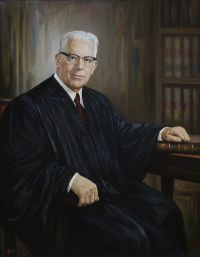
Portrait of Earl Warren Earl Warren Utah Public Service Commission v…

On this view of the judicial process, it is difficult to perceive why the Court should feel constrained to enforce its mandate when the parties have subsequently agreed, in a completely voluntary and bona fide way, that a different solution will better accommodate their interests. We have labor enough in deciding those pressing disputes which the parties are unable to resolve; there is no need to 'do justice' when no litigant is complaining that a wrong has been committed.
Source: Wikisource

Portrait of Earl Warren Earl Warren Utah Public Service Commission v…

Rather than frustrating Cascade's command that 'a new company be at once restored to a position where it could compete with El Paso in the California market,' 386 U.S., at 136, 87 S.Ct. at 937, Judge Chilson's decree adopted the solution which, so far as one can now tell most effectively realized the goals of § 7 of the Clayton Act. Indeed, it is unlikely that as a result of the Court's order today, California's natural gas consumers will ever obtain the benefits of competition that this lawsuit was intended to achieve when it was initiated by the Department of Justice in 1957.
Source: Wikisource

Portrait of Earl Warren Earl Warren Utah Public Service Commission v…

The purpose of our mandate was to restore competition in the California market. An allocation of gas reserves should be made which is 'equitable' with that purpose in mind. The position of the New Company must be strengthened and the leverage of El Paso not increased. That is to say, an allocation of gas reserves particularly those in the San Juan Basin-must be made to rectify, if possible, the manner in which El Paso has used the illegal merger to strengthen its position in the California market.
Source: Wikisource

Get perspective with Kwize: daily news enlightened by great literature