Summary

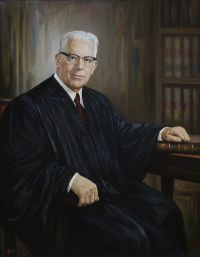
Portrait of Earl Warren Earl Warren Watkins v. United States (354 U.S. 178…

Rumely makes it plain that the mere semblance of legislative purpose would not justify an inquiry in the face of the Bill of Rights. The critical element is the existence of, and the weight to be ascribed to, the interest of the Congress in demanding disclosures from an unwilling witness. We cannot simply assume, however, that every congressional investigation is justified by a public need that overbalances any private rights affected.
Source: Wikisource

Portrait of Earl Warren Earl Warren Watkins v. United States (354 U.S. 178…

The Committee is allowed, in essence, to define its own authority, to choose the direction and focus of its activities. In deciding what to do with the power that has been conferred upon them, members of the Committee may act pursuant to motives that seem to them to be the highest. Their decisions, nevertheless, can lead to ruthless exposure of private lives in order to gather data that is neither desired by the Congress nor useful to it.
Source: Wikisource

Portrait of Earl Warren Earl Warren Watkins v. United States (354 U.S. 178…

An excessively broad charter, like that of the House Un-American Activities Committee, places the courts in an untenable position if they are to strike a balance between the public need for a particular interogation and the right of citizens to carry on their affairs free from unnecessary governmental interference. It is impossible in such a situation to ascertain whether any legislative purpose justifies the disclosures sought and, if so, the importance of that information to the Congress in furtherance of its legislative function.
Source: Wikisource

Get perspective with Kwize: daily news enlightened by great literature