Summary

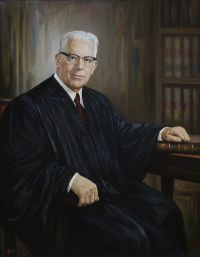
Portrait of Earl Warren Earl Warren Yellin v. United States — Opinion of the Court

They show that the Committee has in a number of instances intended to assure a witness fair treatment, viz., the right to advice of counsel, or protection from undue publicity, viz., the right not to be photographed by television cameras. Rule IV, in providing for an executive session when a public hearing might unjustly injure a witness' reputation, has the same protective import. And if it is the witness who is being protected, the most logical person to have the right to enforce those protections is the witness himself.
Source: Wikisource

Portrait of Earl Warren Earl Warren Yellin v. United States — Opinion of the Court

Rule VIII gives a witness a reasonable time to get other counsel, if his original counsel is removed for failure to comply with the rules. Rule X makes detailed provision for those persons who have been named as subversive, Fascist, Communist, etc., by another witness. Such persons are given an opportunity to present rebuttal testimony and are to be 'accorded the same privileges as any other witness appearing before the Committee.' Rule XIII permits any witness to keep out of the range of television cameras.
Source: Wikisource

Portrait of Earl Warren Earl Warren Yellin v. United States — Opinion of the Court

That petitioner may be questioned in public, even after an executive session has been held, does not mean, however, that the Committee is freed from considering possible injury to his reputation. The Committee has at least undertaken to consider a witness' reputation and the efforts a witness makes to protect it, even though the Committee may in its discretion nevertheless decide thereafter to hold a public hearing. The Committee failed in two respects to carry out that undertaking in Yellin's case.
Source: Wikisource

Get perspective with Kwize: daily news enlightened by great literature