Summary

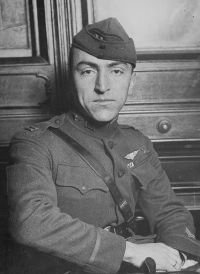
Portrait of Eddie Rickenbacker Eddie Rickenbacker Fighting the Flying Circus — Chapter 20 (1919)

His bravery was so notorious that we all knew he would either achieve some great spectacular success or be killed in the attempt. Even the pilots in his own Flight would beg him to conserve himself and wait for a fair opportunity for a victory. But Quentin would merely laugh away all serious advice. His very next flight over enemy lines would involve him in a fresh predicament from which pure luck on more than a few occasions extricated him.
A few days before his death Quentin Roosevelt went over the lines with his formation, and they came home without him.
Source: Wikisource

Portrait of Eddie Rickenbacker Eddie Rickenbacker Fighting the Flying Circus — Chapter 20 (1919)

Nobody then realized it, of course; but General Foch, who possessed exact information of just when and where the Huns would strike, had prepared for it by crowding in immense quantities of artillery from Château-Thierry to Rheims, from Rheims on eastward to the Argonne Forest. Just two hours in advance of the first German shell he began such a terrific barrage over the lines that the enemy forces were completely disorganized. They were never again to threaten Paris or the allied armies!
Source: Wikisource

Portrait of Eddie Rickenbacker Eddie Rickenbacker Fighting the Flying Circus — Chapter 20 (1919)

When therefore I later learned that the Intelligence Office of the enemy Air Force had complimented the American pilots by saying that "they fought more like Indians than soldiers," and that "they upset all our training by dashing in single-handed against our formations"—I felt a great glow of pride and confidence in the bravery our boys exhibited throughout that trying campaign.
The losses in our group during the four weeks we occupied this sector at Château-Thierry amounted to 36 pilots, who were either captured or killed.
Source: Wikisource

Get perspective with Kwize: daily news enlightened by great literature