Summary

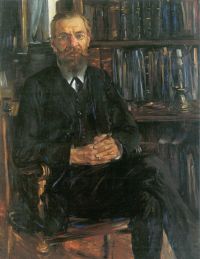
Portrait of Eduard Meyer Eduard Meyer 1911 Encyclopædia Britannica, Volume 24… (1911)

In 337, just before the death of Constantine, Shapur broke the peace concluded in 297 between Narses and Diocletian, which had been observed for forty years, and a war of twenty-six years (337–363) began (Shapur attempted with varying success to conquer the great fortresses of Roman Mesopotamia, Singara, Nisibis (which he invested three times in vain) , Amida (Diarbekr) . The emperor Constantius II. was always beaten in the field. Nevertheless Shapur made scarcely any progress; the military power of his kingdom was not sufficient for a lasting occupation of the conquered districts.
Source: Wikisource

Portrait of Eduard Meyer Eduard Meyer 1911 Encyclopædia Britannica, Volume 24… (1911)

In 363 the emperor Julian, at the head of a strong army, advanced to Ctesiphon, but was killed. His successor Jovian was defeated and made an ignominious peace, by which the districts on the Tigris and Nisibis were ceded to the Persians, and the Romans promised to interfere no more in Armenia. In the rock-sculptures near the town Shapur in Persis (Stolze, Persépolis, pl. 141) the great success is represented; under the hoofs of the king's horse lies the body of an enemy, probably Julian, and a suppliant Roman, the emperor Jovian, asks for peace.
Source: Wikisource

Portrait of Eduard Meyer Eduard Meyer 1911 Encyclopædia Britannica, Volume 24… (1911)

In a paper read before a meeting of the British School of Archaeology at Rome on the 30th of January, 1908, Mr A. S. Yeames endeavoured to show that Timesitheus is the general commemorated by a bust in the Sala delle Colombe of the Capitoline Museum, and by the great sarcophagus in the Museo delle Terme, representing a battle between Romans and barbarians. On the forehead in each case is a non-Christian incised cross of unknown significance.
Source: Wikisource

Get perspective with Kwize: daily news enlightened by great literature