Summary

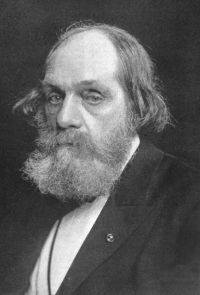
Portrait of Edward Everett Hale Edward Everett Hale The Brick Moon, and Other Stories

No, they were hemlocks, by their shape, and among them were moving to and fro — — — — — flies? Of course, I cannot see flies! But something is moving,—coming, going. One, two, three, ten; there are more than thirty in all! They are men and women and their children!
Could it be possible? It was possible! Orcutt and Brannan and the rest of them had survived that giddy flight through the ether, and were going and coming on the surface of their own little world, bound to it by its own attraction and living by its own laws!
Source: Gutenberg

Portrait of Edward Everett Hale Edward Everett Hale The Brick Moon, and Other Stories

A CHRISTMAS STORY A GRAY morning, the deck wet, the iron all beaded with frost, all the longshoremen in heavy pea-jackets or cardigans, the whole ship in a bustle, and the favored first-class passengers just leaving.
One sad-looking Irish girl stands with her knit hood already spotted with the rime, and you cannot tell whether those are tears which hang from her black eyelashes or whether the fog is beginning to freeze there. What you see is that the poor thing looks right and left and up the pier and down the pier, and that in the whole crowd—they all seem so selfish—she sees nobody.
Source: Gutenberg

Portrait of Edward Everett Hale Edward Everett Hale The Brick Moon, and Other Stories

It was too hateful, all of it, to talk about. I went round to Tom Coram’s office one day, and told him all I knew. He saw it was dreadful to me, and, with his eyes full, just squeezed my hand, and never said one word more. We lay awake nights, pondering and wondering, but hardly ever did I to Haliburton or he to me explain our respective notions as they came and went. I believe my general impression was that of which I have spoken, that they were all burned to death on the instant, as the little aerolite fused in its passage through our atmosphere.
Source: Gutenberg

Get perspective with Kwize: daily news enlightened by great literature