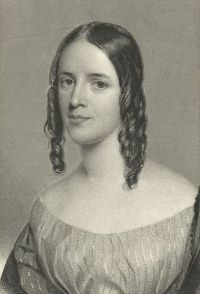
Elizabeth F. Ellet

Elizabeth F. Ellet

Summary

Portrait of Elizabeth F. Ellet Elizabeth F. Ellet The Women of the American Revolution… (1849)

Civilization, however, increased with the population; and in the time of the Revolution, Ninety-Six was among the foremost in sending into the field its quota of hardy and enterprising troops, to oppose the British and their savage allies.
At the commencement of the contest, Mrs. Martin had nine children, seven of whom were sons old enough to bear arms. These brave young men, under the tuition and example of their parents, had grown up in attachment to their country, and ardently devoted to its service, were ready on every occasion to encounter the dangers of border warfare.
Source: Wikisource

Portrait of Elizabeth F. Ellet Elizabeth F. Ellet The Women of the American Revolution… (1849)

During the sieges of Augusta and Cambridge, the patriotic enthusiasm that prevailed among the people prompted to numerous acts of personal risk and sacrifice. This spirit, encouraged by the successes of Sumter and others over the British arms, was earnestly fostered by General Greene, whose directions marked at least the outline of every undertaking. In the efforts made to strike a blow at the invader's power, the sons of the Martin family were among the most distinguished for active service rendered, and for injuries sustained at the enemy's hands.
Source: Wikisource

Portrait of Elizabeth F. Ellet Elizabeth F. Ellet The Women of the American Revolution… (1849)

In January, 1800, she, with her son and his wife, left Savannah in a British ship of twenty guns, with fifty men, built in all points to resemble a sloop of war, without the appearance of a cargo. When they had been out about fifteen days, the captain sent one morning at daylight, to request the presence of two of his gentlemen passengers on deck. A large ship, painted black and showing twelve guns on a side, was seen to windward, running across their course.
Source: Wikisource

Get perspective with Kwize: daily news enlightened by great literature