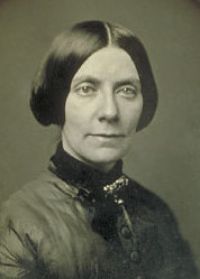
Emma Dorothy Eliza Nevitte Southworth

Emma Dorothy Eliza Nevitte Southworth

Summary

Portrait of Emma Dorothy Eliza Nevitte Southworth Emma Dorothy Eliza Nevitte Southworth The changed brides (1869)

I really believe you are glad to be back at home,” he said, as he placed her in her chair.
“Indeed I am, very glad,” answered Drusilla, truthfully.
“Well, then—so am I,” said Alexander, smiling on her; and then adding, in a lower tone—“It is fate; who can resist it?”
He helped her to the most delicate morsels, from each dish. And to please him she tried to eat a little; but, in truth, joy as surely takes appetite away as grief does; and added to her joy in being at home was a strange, vague presentiment of something about to happen, something imminent and momentous.
Source: Gutenberg

Portrait of Emma Dorothy Eliza Nevitte Southworth Emma Dorothy Eliza Nevitte Southworth The changed brides (1869)

Your beauty, if you take common care of it, will last you until you are sixty years old, and by that time, I, who am so much your senior, will be so blind with age, or love, or habit, that I shall not know whether you are a Venus or a Gorgon,” said Alexander, laughing, and rising from the table.
“Till I am sixty! So many years to live together, you and I, if Heaven should spare us. Such a long and happy life, if you only love me all the time. Oh, what can I do to keep you loving me all these long, long years?” aspirated Drusilla, in a sort of repressed fervor.
Source: Gutenberg

Portrait of Emma Dorothy Eliza Nevitte Southworth Emma Dorothy Eliza Nevitte Southworth The changed brides (1869)

Oh! Alick! my Alick!” impulsively burst from the pale lips of Drusilla with a low, long drawn wail of sorrow.
But Anna once more put her arms around the feeble form, and drew the bowed head down upon her supporting bosom.
“Well, sir, what then?” severely demanded the General.
“I must admit,” said Alexander, with a flushed brow, and with some compunction awakened by the voice of her whom he had once loved, and with much shame at having to make the confession—“I must admit that, though there really was none, yet the poor girl supposed there was a marriage, since there was a semblance of one.”
Source: Gutenberg

Get perspective with Kwize: daily news enlightened by great literature