Summary

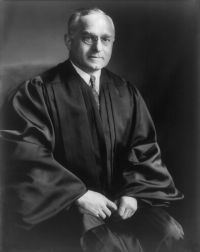
Portrait of Felix Frankfurter Felix Frankfurter Offutt v. United States — Opinion of the Court

The Government has vigorously pressed upon us the leeway that must be allowed to a trial judge in assessing the necessities of such a situation. We do not mean to imprison the discretion of judges within rigid mechanical rules. The nature of the problem precludes it. Nor are we unmindful of the fact that the ultimate finding of reprehensible misconduct by petitioner was sustained by the Court of Appeals. That great weight is to be given to the findings of fact by the two lower courts is a rule of wisdom in the exercise of the reviewing power of this Court.
Source: Wikisource

Portrait of Felix Frankfurter Felix Frankfurter Offutt v. United States — Opinion of the Court

The power thus entrusted to a judge is wholly unrelated to his personal sensibilities, be they tender or rugged. But judges also are human, and may, in a human way, quite unwittingly identify offense to self with obstruction to law. Accordingly, this Court has deemed it important that district judges guard against this easy confusion by not sitting themselves in judgment upon misconduct of counsel where the contempt charged is entangled with the judge's personal feeling against the lawyer.
Source: Wikisource

Portrait of Felix Frankfurter Felix Frankfurter Offutt v. United States — Opinion of the Court

In enforcing Rule 42 (a) , the Court in that case emphasized its duty to safeguard two indispensable conditions to the fair administration of criminal justice: (1) counsel must be protected in the right of an accused to 'fearless, vigorous and effective' advocacy, no matter how unpopular the cause in which it is employed; (2) equally so will this Court 'protect the processes of orderly trial, which is the supreme object of the lawyer's calling.' 343 U.S., at pages 13-14, 72 S.Ct.
Source: Wikisource

Get perspective with Kwize: daily news enlightened by great literature