Summary

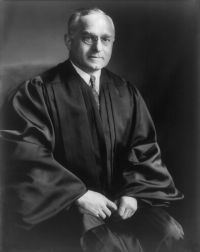
Portrait of Felix Frankfurter Felix Frankfurter Theard v. United States — Opinion of the Court

While a lawyer is admitted into a federal court by way of a state court, he is not automatically sent out of the federal court by the same route. The two judicial systems of courts, the state judicatures and the federal judiciary, have autonomous control over the conduct of their officers, among whom, in the present context, lawyers are included. The court's control over a lawyer's professional life derives from his relation to the responsibilities of a court.
Source: Wikisource

Portrait of Felix Frankfurter Felix Frankfurter Theard v. United States — Opinion of the Court

A proceeding for disbarment of a lawyer is always painful. The circumstances of this case make it puzzling as well as painful. The facts are few and clear. It is undisputed that petitioner, in 1935, forged a promissory note and collected its proceeds. Criminal prosecution and action for disbarment were duly initiated but both were aborted because the petitioner was 'suffering under an exceedingly abnormal mental condition, some degree of insanity' at the time of this behavior, to such a degree that he was committed to an insane asylum and was under a decree of interdiction until 1948.
Source: Wikisource

Portrait of Felix Frankfurter Felix Frankfurter Theard v. United States — Opinion of the Court

The power of disbarment is necessary for the protection of the public in order to strip a man of the implied representation by courts that a man who is allowed to hold himself out to practice before them is in 'good standing' so to do.
The rules of the various federal courts, more particularly the District Court which disbarred this petitioner, have provisions substantially like the present Rule 8 of this Court, 28 U.S.C.A., dealing with disbarment.
Source: Wikisource

Get perspective with Kwize: daily news enlightened by great literature