Summary

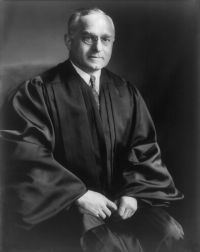
Portrait of Felix Frankfurter Felix Frankfurter Wilkerson v. McCarthy — Concurrence

If there were a bright line dividing negligence from non-negligence, there would be no problem. Only an incompetent or a wilful judge would take a case from the jury when the issue should be left to the jury. But since questions of negligence are questions of degree, often very nice differences of degree, judges of competence and conscience have in the past, and will in the future, disagree whether proof in a case is sufficient to demand submission to the jury.
Source: Wikisource

Portrait of Felix Frankfurter Felix Frankfurter Wilkerson v. McCarthy — Concurrence

This cruel and wasteful mode of dealing with industrial injuries has long been displaced in industry generally by the insurance principle that underlies workmen's compensation laws. For reasons that hardly reflect due regard for the interests of railroad employees, 'negligence' remains the basis of liability for injuries to them. It is, of course, the duty of courts to enforce the Federal Employers' Liability Act, however outmoded and unjust in operation it may be.
Source: Wikisource

Portrait of Felix Frankfurter Felix Frankfurter Wilkerson v. McCarthy — Concurrence

When a plaintiff claims that an injury which he has suffered is attributable to a defendant's negligence-want of care in the discharge of a duty which the defendant owed to him-it is the trial judge's function to determine whether the evidence in its entirety would rationally support a verdict for the plaintiff, assuming that the jury took, as it would be entitled to take, a view of the evidence most favorable to the plaintiff.
Source: Wikisource

Get perspective with Kwize: daily news enlightened by great literature