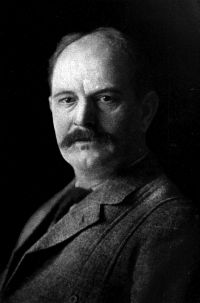
Frank M. Chapman

Frank M. Chapman

Summary

Portrait of Frank M. Chapman Frank M. Chapman What Bird is That?

Color, song, habit and temperament combine to make the Hooded Warbler one of the most attractive members of its family. As one sees it flitting from bush to bush in woodland undergrowth, displaying its white outer tail-feathers as it flies, pausing now and again to utter its simple, sweet whistled song, one is impressed not only by its beauty but by its gentleness. It nests in a bush within a foot or two of the ground, laying 3-5 white eggs, wreathed with shades of brown spots, early in May, in the South, in June, in the North.
Source: Gutenberg

Portrait of Frank M. Chapman Frank M. Chapman What Bird is That?

We need not be ornithologists to be thrilled when the Robin's song in March awakes long silent echoes, or the Thrasher's solo rings loud and clear on an April morning. The Catbird singing from near his last year's home in the thickening shrubbery, the House Wren whose music bubbles over between bustling visits to an oft-used bird-box, the Chimney Swift twittering cheerily from an evening sky, may be heard without even the effort of listening and each one, with a hundred others, brings us a message if we will but accept it.
Source: Gutenberg

Portrait of Frank M. Chapman Frank M. Chapman What Bird is That?

Thirty years ago the Flicker, High-hole or Yellow-hammer, was prey of any boy with a gun and was correspondingly wild and little known; now, thanks to the Audubon Society, he is almost as domestic as the Robin. In search of ants and their eggs, he hunts our lawns and even accepts the hospitality of our nest-logs. A great acquisition to our dooryard life is this bird of beautiful colors, quaint habits, and strange notes.
Source: Gutenberg

Get perspective with Kwize: daily news enlightened by great literature