Summary

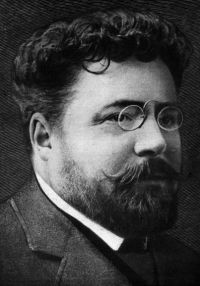
Portrait of Gaston Leroux Gaston Leroux The Secret of the Night — XIII. THE LIVING BOMBS (1914)

But a Priemkof, playing both branches of the police, had a good chance of living a long time, and a Gounsovski would die tranquilly in his bed with all the solaces of religion.
However, the young hearts hot with sincerity, sheathed with dynamite, are mysteriously moved in the atrocious darkness of Holy Russia, and they do not know where they will be sent, and it is all one to them, because all they ask is to die in a mad spiritual delirium of hate and love—living bombs!
Source: Wikisource

Portrait of Gaston Leroux Gaston Leroux The Secret of the Night — XIII. THE LIVING BOMBS (1914)

The whole group, therefore, went to the main staircase, with the movements of drunken men, fantastic waving of the arms, mouths speaking all together, saying things no one but themselves understood. Rouletabille had already hurriedly preceded them, was down the staircase, had time to throw a glance into the drawing-room, stepped over Ermolai’s huge corpse, entered Natacha’s sitting-room and her chamber, found all these places deserted and bounded back into the veranda at the moment the others commenced to descend the steps around Féodor Féodorovitch.
Source: Wikisource

Portrait of Gaston Leroux Gaston Leroux The Secret of the Night — XIII. THE LIVING BOMBS (1914)

It seemed to the young man that he had to contend against all the revolutionaries not only, but all the Russian police as well—and Gounsovski himself, and Koupriane! Everybody, everybody! But most urgent was Priemkof and his living bombs. What a strange and almost incomprehensible and harassing adventure this was between Nihilism and the Russian police. Koupriane and Gounsovski both employed a man they knew to be a revolutionary and the friend of revolutionaries. Nihilism, on its side, considered this man of the police force as one of its own agents.
Source: Wikisource

Get perspective with Kwize: daily news enlightened by great literature