George Albert Boulenger

George Albert Boulenger

Summary

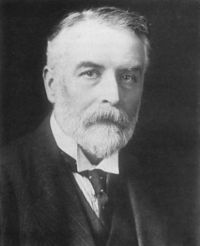
Portrait of George Albert Boulenger George Albert Boulenger 1911 Encyclopædia Britannica, Volume 10… (1911)

If at that age the dorsal fin does not extend to the frontal region, the migrating eye simply moves over the line of the profile, temporarily assuming the position which it preserves in some of the less modified genera, such as Psettodes; in other genera, the dorsal fin has already extended to the snout before the migration takes place, and the eye, passing between the frontal bone and the tissues supporting the fin, appears to make its way from side to side through the head, as was believed by some of the earlier observers.
Source: Wikisource

Portrait of George Albert Boulenger George Albert Boulenger 1911 Encyclopædia Britannica, Volume 10… (1911)

The side which is turned towards the bottom, and in some kinds is the right, in others the left, is generally colourless, and called “blind,” from the absence of an eye on this side. The opposite side, which is turned upwards and towards the light, is variously, and in some tropical species even vividly, coloured, both eyes being placed on this side of the head. All the bones and muscles of the upper side are more strongly developed than on the lower; but it is noteworthy that these fishes when hatched, and for a short time afterwards, are symmetrical like other fishes.
Source: Wikisource

Get perspective with Kwize: daily news enlightened by great literature