Summary

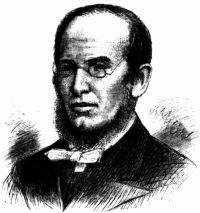
Portrait of George Grimm George Grimm The Australian explorers — Chapter 11… (1888)

Two mountains in this neighbourhood were called Mount Mueller and Mount Wilson, after the botanist and the geologist of the expedition. Once more the terrible salt desert lay before the baffled explorers. "Nothing," says the leader, "could have been more forbidding than the long, straight lines of drift-sand which, having nearly an east and west direction, rose beyond each other like the waves of the sea; and though the red glare of the sand was partially concealed by a scanty growth of spinifex, the reflection from its surface caused the passing clouds to be coloured a deep purple.
Source: Wikisource

Portrait of George Grimm George Grimm The Australian explorers — Chapter 11… (1888)

As the mussels are a species which live in fresh water, it is evident that at such times the lake is not salt, but it would appear that as the waters evaporate and recede they become saline, as the shells found within the limits of the lake were of other species which affect brackish or salt water." One more attempt to make for the south proved abortive, and, with many regrets, Gregory returned to the depôt, after having penetrated within 730 miles of Sturt's most advanced camp towards the centre of Australia.
Source: Wikisource

Portrait of George Grimm George Grimm The Australian explorers — Chapter 11… (1888)

The conduct of this expedition was entrusted to Mr. A. C. Gregory, a very capable explorer, and a man of scientific attainments. His party numbered eighteen persons, including his brother, Mr. H. Gregory, Mr. Wilson, geologist, and the now famous Baron Von Mueller as botanist. The party took with them 50 horses and 200 sheep. The Torn Tough and the Monarch landed the expedition on the Plains of Promise, near the head of the Gulf of Carpentaria, on the 24th September, 1855.
Source: Wikisource

Get perspective with Kwize: daily news enlightened by great literature