Summary

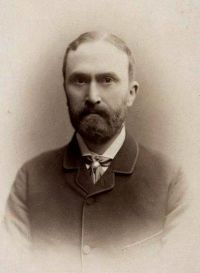
Portrait of John Scott Keltie John Scott Keltie 1911 Encyclopædia Britannica, Volume 16… (1911)

He stands pre-eminent above all; he unites in himself all the best qualities of other explorers. . . . Britain . . . excelled herself even when she produced the strong and perseverant Scotchman, Livingstone.” But the direct gains to geography and science are perhaps not the greatest results of Livingstone’s journeys. His example and his death acted like an inspiration, filling Africa with an army of explorers and missionaries, and raising in Europe so powerful a feeling against the slave trade that through him it may be considered as having received its deathblow.
Source: Wikisource

Portrait of John Scott Keltie John Scott Keltie 1911 Encyclopædia Britannica, Volume 16… (1911)

In all the countries through which he travelled his memory is cherished by the native tribes who, almost without exception, treated Livingstone as a superior being; his treatment of them was always tender, gentle and gentlemanly. By the Arab slavers whom he opposed he was also greatly admired, and was by them styled “the very great doctor.” “In the annals of exploration of the Dark Continent,” wrote Stanley many years after the death of the missionary explorer, “we look in vain among other nationalities for a name such as Livingstone’s.
Source: Wikisource

Portrait of John Scott Keltie John Scott Keltie 1911 Encyclopædia Britannica, Volume 16… (1911)

The next two years Livingstone spent in travelling about the country to the northwards, in search of a suitable outpost for settlement. During these two years he became convinced that the success of the white missionary in a field like Africa was not to be reckoned by the tale of doubtful conversions he could send home each year—that the proper work for such men was that of pioneering, opening up and starting new ground, leaving native agents to work it out in detail.
Source: Wikisource

Get perspective with Kwize: daily news enlightened by great literature