Summary

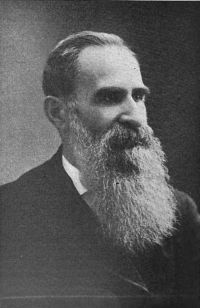
Portrait of George Reynolds George Reynolds Book of Abraham. Its authenticity established as a divine and ancient record… (1879)

We well know that customs, habits, etc., change but little in the stagnant lives of the inhabitants of Egypt, Canaan, and kindred nations, but it is almost too great a stretch on our credulity to ask us to accept as definite the assumed sound of a word in Abraham's day, because it is pronounced in that way now. For instance, who can, with certainty, assert how the ancient Egyptians pronounced the name of their own country? Was it Kham-to, or Gyp-to, or Egyptos, or indeed Ghubsi?
There are certainly some words in the record that are evidently Egyptian.
Source: Wikisource

Portrait of George Reynolds George Reynolds Book of Abraham. Its authenticity established as a divine and ancient record… (1879)

As with the Book of Mormon, so with the Book of Abraham, we feel fully assured, that every day as it passes, every new discovery that has a bearing on its statements, will increasingly vindicate its truthfulness, and bear united testimony that Joseph Smith Was indeed and of a truth a Prophet, Seer and Revelator, inspired by the Spirit of Jehovah, the mighty god of Jacob.
Source: Wikisource

Portrait of George Reynolds George Reynolds Book of Abraham. Its authenticity established as a divine and ancient record… (1879)

Joseph has undoubtedly written the word in the English characters that best represented the actual sound of the word in ancient Egyptian. Scientists know nothing positive of those sounds; they knew that certain hieroglyphics form certain words with certain supposed meaning, but for the sounds they have to rely on the language of the modern Copts, basing their theory on the slender foundation that the sounds of words in Egypt are the same to-day as they were 4000 years ago.
Source: Wikisource

Get perspective with Kwize: daily news enlightened by great literature