Summary

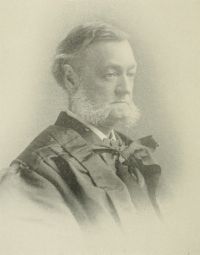
Portrait of George Shiras, Jr. George Shiras, Jr. Mencke v. Cargo of Java Sugar…

In such a condition of affairs we think that resort to lighterage was natural and reasonable and within the obvious and fair import of the terms of the charter party. The clause, which is claimed to give the charterers or their assigns the right to appoint the dock in which to discharge cargo contains conditions that the port must be safe, and that the vessel must discharge, always afloat, either at a safe port or so near the port of discharge as she can safely get.
Source: Wikisource

Portrait of George Shiras, Jr. George Shiras, Jr. Mencke v. Cargo of Java Sugar…

The only place of anchorage for a vessel that cannot cross the bar is off the mouth of the inlet, where vessels were accustomed to discharge into lighters. Thereafter the master filed a libel for demurrage in the district court of the United States for the district of Maryland, whose judgment, sustaining the libel and dismissing the cross-libel of the charterers, was affirmed by the circuit court.
Source: Wikisource

Portrait of George Shiras, Jr. George Shiras, Jr. Mencke v. Cargo of Java Sugar…

Div. 68, was where the charter party provided that the vessel should go 'to a safe port in the United Kingdom, . . . or as near thereunto as she could safely get, and always lay and discharge afloat. . . . Lighterage (if any) always at the risk and expense of the cargo.'
The charterers gave orders to the vessel to proceed to Lowestoft and there discharge the cargo. The average high water in that harbor was about 16 feet, and average low water about 11 feet.
Source: Wikisource

Get perspective with Kwize: daily news enlightened by great literature