Summary

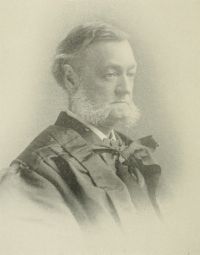
Portrait of George Shiras, Jr. George Shiras, Jr. Smith v. McKay — Opinion of the Court

When the requisite citizenship of the parties appears, and the subject-matter is such that the circuit court is competent to deal with it, the jurisdiction of that court attaches; and whether the court should sustain the complainant's prayer for equitable relief, or should dismiss the bill with leave to bring an action at law, either would be a valid exercise of jurisdiction. If any error were committed in the exercise of such jurisdiction, it could only be remedied by an appeal to the circuit court of appeals.
Source: Wikisource

Portrait of George Shiras, Jr. George Shiras, Jr. Smith v. McKay — Opinion of the Court

The position of the appellee is that only questions of federal jurisdiction can be brought directly here; that, if the circuit court has jurisdiction of the parties and of the matters in dispute, the fact that it is contended that it has no jurisdiction on its equity side raises no question of jurisdiction, within the meaning of the act under which this appeal is taken; and that whether a case has been made out by the plaintiff in equity or at law is not a question that puts in issue the jurisdiction of the court, in the sense in which that phrase is used in the judiciary act.
Source: Wikisource

Portrait of George Shiras, Jr. George Shiras, Jr. Smith v. McKay — Opinion of the Court

We regard this as a sound exposition of the law, and, applied to the case now in hand, it demands a dismissal of the appeal on the ground that the objection was not to the want of power in the circuit court to entertain the suit, but to the want of equity in the complainant's bill. The appellants' contention in this respect would require us to entertain an appeal from the circuit court in every case in equity in which the defendant should choose to file a demurrer to the bill on the ground that there was a remedy at law.
Source: Wikisource

Get perspective with Kwize: daily news enlightened by great literature