Summary

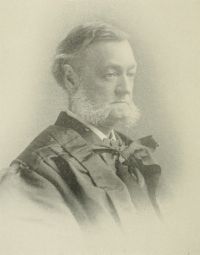
Portrait of George Shiras, Jr. George Shiras, Jr. Wager v. Providence Insurance Company…

It is contended that the insurance companies, having paid the loss to the owners of the cargo, are entitled to be subrogated to the rights of the assured against the carriers.
It is too well settled by the authorities to admit of question that, as between a common carrier of goods and an underwriter upon them, the liability to the owner for their loss or destruction is primarily upon the carrier, while the liability of the insurer is only secondary. The contract of the carrier may not be first in order of time, but it is first and principal in ultimate liability.
Source: Wikisource

Portrait of George Shiras, Jr. George Shiras, Jr. Wager v. Providence Insurance Company…

His right rests upon familiar principles of equity. It is the right of subrogation, not at all upon privity of contract, but worked out through the right of the creditor or owner. Hence it has often been ruled that an insurer who has paid a loss may use the name of the assured in an action to obtain redress from the carrier whose failure of duty caused the loss.
Source: Wikisource

Portrait of George Shiras, Jr. George Shiras, Jr. Wager v. Providence Insurance Company…

Coming, now, to the appeal of Wager, (No. 41, October term, 1893,) we are met by the contention that Wager, as master of the Sydney and as carrier, was entitled to the benefit of the insurance, and that hence it was error on the part of the circuit court to allow the insurance companies to recover against him by way of subrogation. It is admitted that Wager was not nominally, and in terms, insured; but the testimony of Morse and of Wager himself is relied on as showing that it was understood and intended that Wager was a beneficiary under the policy.
Source: Wikisource

Get perspective with Kwize: daily news enlightened by great literature