Summary

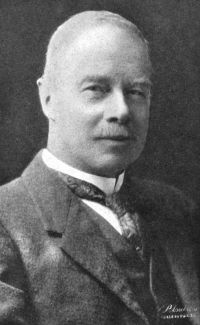
Portrait of George Vernon Hudson George Vernon Hudson An Elementary Manual of New Zealand Entomology… (1892)

The pupa may be frequently discovered inside that of the moth, and is quite white in its early stages, but as age advances all the colours of the future insect can be seen through the thin pellicle which invests it. The perfect insect makes its escape through a circular hole, which it drills in the upper end of the unfortunate moth pupa it has destroyed. The sexes of all ichneumon-flies may be at once recognized by the females possessing an ovipositor [3] differing considerably in length among the various species, but nearly always plainly visible.
Source: Wikisource

Portrait of George Vernon Hudson George Vernon Hudson An Elementary Manual of New Zealand Entomology… (1892)

Its nest is constructed in crevices in the bark of trees, &c., the insect very frequently selecting the spaces between the boards of outhouses, where the loud buzzing noise made by the perfect bees when emerging from their retreat at once arrests our attention. These nests consist of about ten oval cells, formed of clay, and neatly smoothed within. They are all constructed by a single female, which also provisions them with honey and pollen, depositing an egg in each. The larva, after consuming the food, changes into a pupa, from which the perfect insect emerges about January.
Source: Wikisource

Portrait of George Vernon Hudson George Vernon Hudson An Elementary Manual of New Zealand Entomology… (1892)

Into this burrow she pushes a large quantity of spiders, which she has previously captured and paralyzed with her venomous sting. When her nest is properly provisioned she deposits an egg in it, closes the hole with a neat plug of clay, and leaves the larva to quietly consume its half-dead companions. Each female, no doubt, forms a large number of these cells during the summer. While cutting up old logs for Coleoptera, the entomologist will not infrequently come across these nests, when the insects may be found in various stages of development.
Source: Wikisource

Get perspective with Kwize: daily news enlightened by great literature