Summary

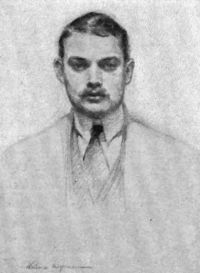
Portrait of Guy Wetmore Carryl Guy Wetmore Carryl The Lieutenant-Governor — Chapter XII. Diogenes (1903)

No one note achieves individual immortality, but each does something to assure the immortality of the composition of which it forms a part. If we don’t believe that, if we are not content to have it so, how is it possible to believe in any divine purpose, any scheme of justice at all? Look at the indescribable waste of life on all sides of us. If only in the case of humanity, people are dying by hundreds every minute, unheeded, unlamented, unrecorded. Human life is such a little thing! — as little as the life of the leaf or the raindrop.
Source: Wikisource

Portrait of Guy Wetmore Carryl Guy Wetmore Carryl The Lieutenant-Governor — Chapter XII. Diogenes (1903)

A woman once said to me that the good in her was not cultivated nor exercised with a view to individual immortality. That seemed to me to mean so much that I’ve built up quite a little creed on it. It’s the principle, isn’t it, upon which the whole scheme of the world hinges? A million leaves fall and decay to enrich the soil wherefrom two million more may spring. An infinity of little shell-fish die, and the ages grind their shells to powder to make the sands and the chalk cliffs. Countless raindrops sacrifice their identity to maintain that of one great river.
Source: Wikisource

Portrait of Guy Wetmore Carryl Guy Wetmore Carryl The Lieutenant-Governor — Chapter XII. Diogenes (1903)

I may not be able to believe that; but there is one belief possible to all of us, — I mean that, if not in death, then assuredly in life, we have been of service to our race and time. We are often told that the indispensable thing does not exist. I think the same may be said of the useless one. I don’t believe even the humblest of God’s creatures goes out of life without having been at one time or another an influence for good.
Source: Wikisource

Get perspective with Kwize: daily news enlightened by great literature