Summary

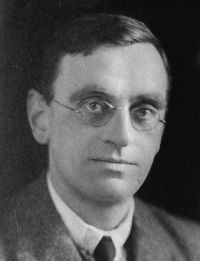
Portrait of H. C. Bailey H. C. Bailey The Highwayman (Bailey) — XXIII. THE HOUSE IN KENSINGTON (1915)

Harry looked him over. He was certainly a fine figure of a man, and bore himself gallantly enough. His face was darkly handsome in a melancholy fashion, not unlike the youth of his uncle, Charles II. He turned upon Harry. "What is all this, sir?"
"Oh, sir, it's that old rogue Noll Boyce," my lord put in. "And here's his son betraying the father."
"Faith, my lord, I'll remind you of that," O'Connor said. "Sir, the gentleman is an honest gentleman."
"Colonel Boyce—he is your father, sir?" the Pretender bent his black brows over Harry.
Source: Wikisource

Portrait of H. C. Bailey H. C. Bailey The Highwayman (Bailey) — XXIII. THE HOUSE IN KENSINGTON (1915)

Of all men, Harry Boyce was the least likely to be pleased by oddity or an extravagance of chivalry. He always thought, I believe, that Captain McBean was a little mad, and liked him none the better for it. But he confessed that with the madness there was allied a most persuasive mind, a very reasonable reason. The combination may not be so surprising to you as to Harry Boyce. He thought that McBean's exposition of the affair of his father, and his consequent duty, was exactly and delicately true—which means, of course, that it agreed with his own temper.
Source: Wikisource

Portrait of H. C. Bailey H. C. Bailey The Highwayman (Bailey) — XXIII. THE HOUSE IN KENSINGTON (1915)

For the first time in their acquaintance, Harry saw Mr. O'Connor smile. "I have the honour to take your orders, sir. But sure, we are not at the end of our tactics. I'll presume to advise you. Let the coach come to the door, and me and the other gentlemen will make some display of mounting her and guarding her; she moves off slowly; it's any odds the rogues will believe we have you with us and deliver their main attack, while you'll be mounting quietly in the yard with my lord and ride off with him to Kensington."
Source: Wikisource

Get perspective with Kwize: daily news enlightened by great literature