“ There is a moss on the birch trunks which makes a colour of singular charm, a soft, delicate, grey green. A hood of that colour embraced Alison's black hair and the glow of the dark eyes and her raspberry lips. The cloak of the same colour she drew close about her with one gauntleted hand, so that it confessed her shape.The birches could still show a few golden leaves, though each moment another went whirling away as the crests bowed and tossed before the wind. In the brown bracken beneath Harry Boyce stood waiting. His graces were set off with his customary rusty black. ”
H. C. Bailey
Biographical details

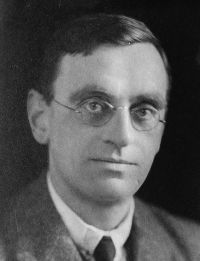
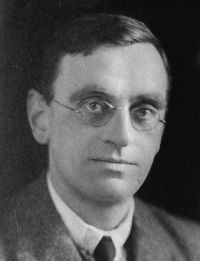
H. C. Bailey (1878–1961), an English author celebrated for his detective fiction, constructed complex stories centered on the medically trained detective Reggie Fortune, whose tales explore themes of murderous obsession, police corruption, and social injustice.
His works, often darker than those of contemporaries like Lord Peter Wimsey, also include historical romances such as My Lady of Orange (1901), examining medieval Europe’s turbulent past. Bailey’s dual legacy—pioneering psychological insight in crime fiction and rich historical drama—establishes his position as a key figure in early 20th-century literary mystery.
Quotes by H. C. Bailey
 H. C. Bailey,
The Anachronism
(1904)
H. C. Bailey,
The Anachronism
(1904)
“ Blacker than the night before them loomed the narrow mouth of a cavern, and out of it over the bare rock ran a tiny stream. Glaucon strode on into the cool gloom; but Laloo stopped, for it was the sacred cave of Grantor, where the god of the water lived, in the stream that was never dry in hottest summer drought. “Good!” said Glaucon, sniffing the clean air, and set down his burdens and called “Laloo!” But Laloo would not come, lest the god of the water should be angry, and Glaucon ran back to her and caught her up with a laugh, and bore her in and set her down and kissed her lightly. ”
H. C. Bailey,
The Highwayman (Bailey) — XV. MRS. BOYCE
(1915)
“ So the wise and eminent were busy while Harry Boyce and his Alison made trial of their marriage. Harry lived in a dream of bewildered happiness. He had counted on nothing but the need of his passion, hoped for nothing but its ecstasy in her beauty, and at its wildest the strain of gloom in him had bade him dread what lay beyond. She gave him a miracle of mad delight. A new force of life was born in him while he enjoyed her joy. It was a discovery of intoxicating power that he could wake that rare, consummate creature to such eager exultation as his own. ”
H. C. Bailey,
The Tale of a Triumph
(1921)
“ Good Roger, where are your wits? I am sped. So are we all. Never a king was done to death but a thousand die for his killing. The wolf hath the sheep and the hounds are upon the wolf." "Angevin!" Roger cried, for at last he saw his men's faces. "Your craft serves you not now. Out, fellows, out. Leave me alone with them." "The brave Roger!" the king laughed. "Alone with a bound man and a woman bound. O gallant knight." "Aye, fool it to the last, Henry. There is nothing left you but your tongue. Now hear you me. Not at my will only you lie bound, but for the lady your queen. ”
H. C. Bailey,
The Lonely Queen — I. The Way She Should Go
(1910)
“ But once out of sight, Elizabeth ran fast to the privy garden. To a child's mind that privy garden was a very castle of mystery. Through the scrollwork of the gates one might see strange devices wrought in the ground with stones of many colours, likewise a fountain which spouted clear water and transformed it into a flood of wine and molten gold as it fell. There were gilt statues too, and strange flowers and trees. The high red walls on their outer side bore great plums and apricots. What wondrous fruit should grow within! ”
H. C. Bailey,
The Fool — Chapter 11
(1921)
“ Nenny, nenny, poor Bran is a fool. There is no past nor time to come. Now is all. What hath been is naught and hath no power over what shall come, if what now is is wisely done and well. That is the faith for man. Now is all, oh Bran my brother. But you are no man. You have no life. You are a dreamer and a dream. You are a word in the air, you are a thought in the mind, you are a hope in the heart. You come and go and naught is done. Na, na, God have mercy, brother, but what should I do, I? If I could make the man to my pleasure, naught should fall him but grief beyond measure. ”
H. C. Bailey,
The Pageant of England — I. The Coming of Cæsar
(1908)
“ There rose an amiable grunting, and into the grove rolled Oor, the brown bear. He sniffed the wind that blew past Caradoc, blinked and came to him, panting delight as a speechless baby totters to its mother. He lay on his back and scraped Caradoc's legs with his big paws, and wiped the honey from his whiskers on Caradoc's toes. Such joviality disturbed the grim meditations of the king, and he kicked Oor in the ribs, so that the beast coughed and sat upon his haunches and looked mild reproach. For a king should be amiable to the body in which lives the soul of his race. ”
H. C. Bailey,
Sir Albert's Fall
(1902)
“ The provost's men came to lay hands on him, and he watched them come; then as one touched him his eyes fell again on the dead, and on a sudden he tottered and fell forward on his face, with his arms wide-spread, and he lay on the ground like a cross. A silence fell on all. Slowly the provost came forward and bent over him. For a long time he knelt, loosing Sir Albert's armour. The steel clashed faintly as he moved it, and at last he let Sir Albert fall again on his face. His eyes were big with wonder as he rose. "My lord, my lord," he stammered, "the man is dead!" ”
H. C. Bailey,
The Pageant of England — II. Alfred the King
(1908)
“ The huge fighting men lay at their ease, munching dried fish for a whet to the coming feast. In the midst a bearded harper sang. If hard faring or age had not bowed his strength he would have been of a proud presence, and for all the piteous blinking eyelids, that told of failing sight, his face was noble yet. For certain he could sing. His voice rang deep and strong to a strain that set the fierce eyes flashing and strong limbs a-quiver. Now the whole throng moved with a dull clash of steel, and more and more gathered eager to hear. ”
“ This must needs be the way of life. No man's passion could be stronger than his. Doubtless he too had his secret soul apart. And indeed it was glorious not to lose self in love, to stay always, through the ecstasies, aloof, to give always anew of will and choice—never to merge helpless in some unknown double being and become only half a body, half a soul, capitulating always to the rest, to the other.This self-glorious pride of hers gave her for a while that zest in all the trivial common things which made her a companion so delightful to Harry's temper. ”
H. C. Bailey,
The Moor of Milan
(1924)
“ Silvain said gently. “And I have done nothing? Is that it? Why, child, the world will talk of Beatrice of Milan when you are dead and dust. I have had power over men. But let me be what you say. I have done nothing, I am nothing! Then in God’s name why do you come to serve me?” “I serve those who need, lady. For the joy of the venture and the honor.” She flung out her white arms and pointed at him: “He saves others! himself he will not save!” And she laughed. “A saint you are, not a knight nor a man.” It was there or thereabouts that Lodovico came in. ”
H. C. Bailey,
The Golden Whistle
(1906)
“ Canillac was gripping her bound hand in his, Canillac was drawing her closer, when, like rolling thunder, broke the thud of galloping horses and the ground began to tremble. "France! France! St. Denis! Death!" the shouts of war rose loud. For M. de Ratine, having ears, had heard his whistle peal; but, having eyes also, had seen Canillac's troop; and so, being only one man on foot, had not come to the rescue. Breathing short through his nostrils, M. de Ratine ran back to the cave where he made his lodging, endued himself in his cuirass of Milan steel, and flung a leg over his Normandy mare. ”
H. C. Bailey,
My Lady of Orange — Chapter 14
(1901)
“ There is still a chance for Vermeil to save his own dirty hide, and, by God! when I play, I play to win!" "Yes, yes," she cried. "What can I do?" "The fool—bah! fool is too good a name—the rat lies there half drunk, half stunned, half asleep, and when he wakes his head will be like a bee-hive. So; let us send him a letter from his friend, Vitelli!" and Gaspar sat himself down and chuckled. She looked at him wondering, and he went on, leaning across the table towards her: "If I took it—I am too big to be anybody but myself. If one of our knaves took it, he knows their faces to a man. ”
H. C. Bailey,
The Highwayman (Bailey) — XXII. TWO'S COMPANY
(1915)
“ Alison was gone back to her house at Highgate—and immediately regretted it. She took her adventures in a youthful, egoistic fashion: saw herself as a lovely woman made the prey of man and robbed of her right to her own life, a tender, confiding soul deceived and tortured into despair. The Lincoln's Inn Fields became the abomination of desolation, her fine society was dust and ashes and mankind in general all mocking villainy. So it was natural that she should retire from the world and become a recluse of tragic dignity. What other part is there for the deserted wife to play? ”
H. C. Bailey,
The Lonely Queen — III. A Game of Bowls
(1910)
“ If Northumberland worked his will and his son Lord Guilford were firm on the throne with Lady Jane, she might as well seek comfort in death. For which she had no mind at all. But how could she fight for herself? There were friends who would risk something for her, who would fight, perhaps, to save her from Northumberland. But she wanted more than safety. Would they fight to win her the crown? The cautious mind, strong as her ambition or her passionate will, cried a loud warning. She had no right to the crown yet. For every claim that she had, Mary's claim was stronger. ”
H. C. Bailey,
The Fool — Chapter 14
(1921)
“ Becket called. "I know not," Bran roused himself. "Master Thomas, if you met the devil a-walking on this earth, how would you do?" "Take heart and slay him," Becket laughed. "Yea, yea, and when God came upon earth men did even so." "Out on you, fool, you talk like an infidel." "No, by my faith, he says well," the King cried. "He thinks deep, my Bran. What men fear that they kill." "Good or ill, that they kill," Bran echoed. "But what of that, care killed a cat, eat my Thomas, eat and grow fat, long is your nose but longer your face, oh Thomas, my lord, take heart of grace." ”
H. C. Bailey,
The Tale of a Villein
(1921)
“ She was a comely creature, something worn by hard living, but tall and finely made and of a gentle face. Bran looked up into her blue eyes: "How are you called, maid?" She blushed and he knew that a maid she was and not without thought of whom she should wed: "I am Godiva," she said. Then he surprised her again: "These men of yours, are they all craftsmen?" "Surely, yes, one and all." "And who is their leader?" Again she blushed: "It is Godric. He is a joiner, the best joiner in all our hundred." "The Lord loves a good craftsman. But God have mercy, the world is wide. ”
H. C. Bailey,
The Fairy Prince
(1904)
“ There was a rustle, like the sound of bees in a grove of limes on a summer's day, and the Welshmen were all round them—a mob of sturdy, small men, for the most part with no armour above their tunics and saffron cloaks, for the most part bare-legged and bare-foot; but some few with little coats of mail and battle-axe, and sword in place of spear. They all chattered together. One who seemed the leader, not much more than a lad, and beardless, thrust through the midst and laid his hand on the King's arm, crying, “Yield thee to me, Iestyn, son of David, son of Owen.” ”
H. C. Bailey,
The Fool (Bailey) — Chapter 22
(1921)
“ Nay, man, she is a woman though she loves me not. She is a Queen in her heart and her lads are bred to be kings. And bold lads they are and noble and manhood comes on them now. It is time, God knows. I grow old and men think I grow weak. The barons lift their heads here and beyond the sea, and everywhere I cannot be. Do you know what I have in mind, old Bran? I will leave Henry here to be King in England for me, while I take the young ones over sea and school Normandy and Aquitaine. ”
H. C. Bailey,
The Fool and the Queen
(1921)
“ And the queen laughed. When the archbishop rose again, he was smiling. "Lady, do you uphold your marriage?" SHE stared at him as though she wondered at his insolence, his folly. She gave herself time to think, then: "God's body! my lord, who would cling to such marriage as mine?" she cried. "What woman would cleave to a husband who has put such wrong upon her? But in marriage or out of marriage I will have my honor clean." And the archbishop still smiled. "It has been said to me that your marriage is no marriage, lady." ”
H. C. Bailey,
My Lady of Orange — Chapter 20
(1901)
“ If Don Frederico could have kept secret the knowledge he and Vitelli had, perhaps the sea might have come too slow for Alkmaar; and even if not, if it was not I who saved Alkmaar, why, at least it was I who saved the land. Is mine a poor love-story? You lasses who think love is a kiss and a pretty speech, even you will not gainsay me when I tell you that the love which led me in this thing that I did was a real love after all. The things in my life that I like to think of most are the things I have done since a little scornful laugh rang in my ears by our bivouac at Veermut. ”
H. C. Bailey,
My Lady's Lord
(1908)
“ Nothing could be better designed to make a man live in a woman's thoughts. “I hate him!” said Kitty Islip. “Kitty!” My Lady Tranmere was amazed and pained. “Indeed! then there was no need for you to stay with us,” she said coldly. It was Kitty's turn to be amazed. “Dorothy, dear! You could not possibly, possibly want to be alone with him?” The lovely white and peach-blossom tints of my Lady Tranmere's face were hidden in rosy red. She made no answer at all. But as the girls wandered on through the garden their arms unlinked, they drew a little apart. ”
H. C. Bailey,
The Highwayman (Bailey) — XXIX. ALISON KNEELS
(1915)
“ Does it matter, Weston, dear? He cannot help us to Harry.""I am afraid of him. Oh, it's all wrong maybe. I am so weak and stupid. But I am afraid what he may do with Harry.""Indeed, I think Mr. Harry can keep his head even against Colonel Boyce," Alison smiled."His head?" Mrs. Weston looked puzzled. "I don't mean that, I believe. I am afraid he may win Harry to be like himself. He is so clever and dazzling, and he is full of wickedness. He cares for nothing but his own will and to have power. When I saw him so friendly with Harry I thought I should have died." ”
H. C. Bailey,
A Plot in the Duchy
(1905)
“ Become, Betty, a philosopher. Love thyself—faith, all others are unworthy—and thy neighbour in a merely Christian spirit. So——” “I wonder sometimes if you are a man at all!” cried Betty fiercely. “To myself I seem sometimes divine,” my lord admitted. “And to others—la! to others—God save us.” My lord shook back his ambrosial black curls and stretched himself. “I argue,” he observed, “that I seem to you wanting. In what, my Queen Rhadamantha?” Betty sprang up, a tall maid and lovely in her wrath, “Was it one of your name, then, my lord, that rode with Sir Bevil Grenville?” she cried. ”
H. C. Bailey,
Hungry Hours
(1908)
“ The wind surged with the roar of wanton strength. All down the valley, under a seething silver sky, dark trees plunged in a weird, wild dance, and the rivers gleamed like tossing chains of jewels. Laurent came delicately through the gorse of the hillside. His cap was lost and his black hair mad, but he addressed to himself a low and placid recitation. It was lachrymose Latin out of Propertius, concerning the certainty that love (which cuts to the bone) will come to every miserable man, and it affected the green eyes of Laurent with calm delight. ”
H. C. Bailey,
The Highwayman (Bailey) — X. YOUNG BLOOD
(1915)
“ The haughty gentleman dared believe that he could be very comfortable without Miss Lambourne. It must not be allowed. He was by far too fine a fellow to be let go his way. Faith, it was mighty noble, this self-sufficient power of his, capable of anything, caring for nothing, hiding itself behind an impenetrable mask, and living a secret life of its own. She was on fire to enter into him and take possession, and use him for herself.So she was driven by a double need, knew it, and was not the least ashamed. She longed to have Harry Boyce in her arms and his grip cruel upon her. ”
H. C. Bailey,
The Lonely Queen — Art Magic
(1910)
“ Elizabeth stood still, cold and bound with thought, in the hour of triumph. All the world was upside down. The Queen had broken with Spain—the Queen was turning from Rome. The tyranny was over—past. The flames that had tortured England would die down. There would be safety and free life again. But what of the wrath to come? Nor Spain, nor Rome would take such defeat lightly. In a while she remembered that propriety called her to her sister's sorrows. She went in and was dutifully kind. Mary lay upon her bed, body and limbs drawn together, and sometimes she sobbed. ”
H. C. Bailey,
The Highwayman (Bailey) — XV. MRS. BOYCE
(1915)
“ All the old, reasonable, practical fears were become ludicrous cowardice, only remembered for Alison to tease with. As for other people, and what they said and thought and did, some folks were kind and were welcome, no folks were of account. He and she deliciously sufficed themselves. And there was no dread of change, save in age and death, infinitely distant and insignificant—no matter but to glorify the power of life. Sometimes he was aware that the wonder of passion must grow faint and fail, but he saw nothing which could take from him the quiet, exquisite, daily joys. ”
H. C. Bailey,
The Pageant of England — I. The Coming of Cæsar
(1908)
“ We cannot fight you man for man, You have too much iron on your bodies. You have too much in your souls. But we have fire, and iron yields to that at the last.” “The fire dies, and the iron is left stronger. Rome has always known how to wait, King Caradoc.” “Oh, you talk to me of Rome as I to the tribe of my magic. It is well for children, Cæsar. I am a man and a king. Talk of what is. See now! You can burn all our corn, but you cannot make us slaves. We cannot drive you out, but we can harry you all the while you stay. Come then! wise men do not fight to lose, and in this war no man wins.” ”
“ She would still boast to herself that she was not the woman to be swept away by a gust of longing for the man who chanced to take her eye. And so she brought down on herself the inexorable question—if Harry were man enough to wake passion in her and deserve her magnificence, why had she driven him off? For all her selfishness and her insolent pride, she had a vehement desire, a part perhaps of her very pride in her womanhood, to owe him nothing, to play him fair, to give him all that a man could ask. ”
H. C. Bailey,
The Fool — Chapter 12
(1921)
“ You see him again in that room among his books, Becket standing before him, grave and austere. Bran at his feet fondling him. "My brother, my brother, there are wounds on you." "The fox snaps when you break him. It is nothing. Where is my true Queen, Bran?" "Nay, brother, I know not. The best of all is you are safe. Oh give God thanks and be kind." "Fool, fool," the King put a hand on the big head. "You would cry heaven in hell. Bid her come, my lord." "Oh Henry, my brother, speak peace, peace. There is no right in vengeance. You have made children, the woman and you. The past is dead. ”
H. C. Bailey,
The Fool — Chapter 8
(1921)
“ From the truffles to Bran, from Bran to the truffles, the good folk stared unbelieving. "How, in God's name?" quoth Godric. "Where the beeches grow, there grow truffles," Bran shrugged. "But you have no dog, man. Or—" he crossed himself and looked all about. "What aids you?" Bran laughed. "Nenny, nenny. No dog, nor pig neither. Nay, nor ghost thereof. Bran hath only Bran. But Bran is the good earth's brother." "You are more than a man." "Yea, yea, or less, being a fool." So they made a savoury meal, and when they began to be genial, "What is this Eudo, brother, that you love him so?" ”
H. C. Bailey,
The Fool — Chapter 19
(1921)
“ Once you called him friend." "I am the friend of all poor men. And of all good men the servant. May I serve you, Bran?" "I am a sad man this day, lord." "Sorrow told is sorrow halved," said Becket gently. "Speak your heart, brother." "You are a great man and wise and a fool am I. Be gentle, lord." Becket smiled. "I remember you would call me a hard man in the old days. While I lived in the world I was as the world. I am a priest of God. I will be hard to none but God's enemies, brother Bran." "Oh Thomas my lord, it is a wide world and there be evil men enough. ”
H. C. Bailey,
The Pageant of England — II. Alfred the King
(1908)
“ Lordly life is all mad joy. Hath thy maiden heart no longing?” She was turned from him. She made no answer. On the throbbing wind was borne the wanton gaiety of a blackbird's song. The Dane came to her quick-breathed. “Man's triumph is maid's triumph, Morwenna. Thy best hour is born of mine. Thy——”She sprang from him and fronted him with wild bright eyes. “I am mine own,” she cried flinging her arms wide to the wind: “and glad—glad!” “Ay, fight thine own heart! It has not been at thy will many a day.” “It rests in my bosom, not thine, Dane.” ”
H. C. Bailey,
The Tale of a Villein
(1921)
“ Bran came down from his horse. "Yea, brother, yea," he grinned and shuffled in the beech mast, "all this is mine and the white chalk under that made my bones. Why are you unkind to me, brother?" "You are a Frenchman and some French lord's hound." "A hound, I! Hear him!" he barked grotesquely. "God mend your wits, brother. Do I look a hound?" and he showed off his ungainliness and grimaced and some of them began to grin. "Holy thorn, who are you that you call me French?" "We be good Saxon folk and we want no Norman dogs to spy on us." ”
H. C. Bailey,
A Plot in the Duchy
(1905)
“ My lord peered at him through the gathering gloom: saw something tall and gaunt shrouded in a cloak, a hat cocked truculently. The hat displeased him. “Faith, I am no fellow of thine,” says he, and dropped down to the road; then paused. “But to be called fellow by any fellow is, rightly understood, praise.” So he waited. “Am I going to Trelights, fellow?” cries his man. My lord made him a bow. “Sir, you know best.” “Sure and I do not, or I would not be asking you, fool. Will I come to Trelights, fellow?” “Sir, God knoweth.” “Odso, knave; is this the road to Trelights?” ”
Common terms
Works by H. C. Bailey
The HighwaymanThe Tale of a TriumphTale of the King's HeirThe Tale of a VilleinThe Lonely Queen — Art MagicThe Love of MoneyUnder the Fleur-de-LisBlack MagicThe Fool and the QueenThe Moor of MilanMy Lady's LordHungry HoursThe Lone HandA Wager at Brooks'sThe Magic StoneThe GladiatorThe Nun of NewsteadThe Fairy PrinceDoublets and HoseA Plot in the DuchyThe Knight of MayfordThe Men in BuckramThe Intentions of RaoulThe Hopkins RomanceThe Golden WhistleThe Devil of MarstonThe AnachronismSir Bertram's TrystSir Albert's FallA Loyal TraitorMr. Fortune's PracticeCall Mr. FortuneThe Fool — Chapter 20The Pageant of England — VI. An Angel of RevolutionThe Lonely Queen — V. The King's WayThe Fool — Chapter 19The Lonely Queen — II. Her First LoverThe Fool — Chapter 18My Lady of Orange — Chapter 9The Fool — Chapter 6The Fool — Chapter 15The Fool — Chapter 3The Lonely Queen — III. A Game of BowlsThe Fool — Chapter 11The Fool — Chapter 5My Lady of Orange — Chapter 17The Pageant of England — I. The Coming of CæsarThe Fool — Chapter 10The Fool — Chapter 4My Lady of Orange — Chapter 8The Pageant of England — IV. King John Comes to HeelThe Fool — Chapter 8The Fool — Chapter 9My Lady of Orange — Chapter 12My Lady of Orange — Chapter 13The Lonely Queen — I. The Way She Should GoMy Lady of Orange — Chapter 10The Pageant of England — V. The Merry KingThe Lonely Queen — IV. Spain ProposesThe Fool — Chapter 7My Lady of Orange — Chapter 4My Lady of Orange — Chapter 6My Lady of Orange — Chapter 7My Lady of Orange — Chapter 20The Pageant of England — III. William the NormanThe Pageant of England — II. Alfred the KingMy Lady of Orange — Chapter 5My Lady of Orange — Chapter 3The King's Way (Bailey)The Fool (Bailey) — Chapter 23The Fool (Bailey) — Chapter 22The Fool (Bailey) — Chapter 27The Fool (Bailey) — Chapter 24The Fool (Bailey) — Chapter 25