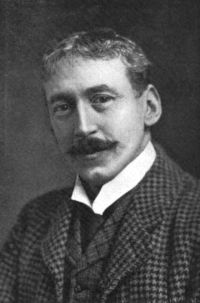
H. De Vere Stacpoole

H. De Vere Stacpoole

Summary

Portrait of H. De Vere Stacpoole H. De Vere Stacpoole The Man Who Lost Himself

To be Rochester was not only to be a lord, it was more than that. It was to be famous, a national character, whose picture was printed on the retina of the million. Never had Jones felt more inclined to stick to his position than now, with the hounds on his traces, a tramp for his companion, and darkness ahead. He felt that if he could once get to London, once lay his hands on that eight thousand pounds lying in the National Provincial Bank, he could fight. Fight for freedom, get lawyers to help him, and retain his phantom coronet.
Source: Gutenberg

Portrait of H. De Vere Stacpoole H. De Vere Stacpoole The Man Who Lost Himself

What on earth did it matter to him if these men looked coldly upon another man? It did. It mattered quite a lot, more than perhaps it ever mattered to the other man. Is the soul such a shallow and blind thing that it cannot sort the true from the false, the material from the immaterial, cannot see that an insult levelled at a likeness is not an insult levelled at it?55
Surely not, and yet the soul of Victor Jones resented the coolness of others towards the supposed body of Rochester, as though it were a personal insult.
Source: Gutenberg

Portrait of H. De Vere Stacpoole H. De Vere Stacpoole The Man Who Lost Himself

What a woman! and what a fate!
It was at this moment, whilst walking home to Carlton House Terrace, that the true character of Rochester appeared before him in a new and lurid light.
Up to this Rochester had appeared to him mad, tricky, irresponsible, but up to this he had not clearly seen the villainy of Rochester. The woman showed it. Rochester had picked up a stranger, because of the mutual likeness, and sent him home to play his part, hoping, no doubt, to have a ghastly hit at his family. What about his wife?
Source: Gutenberg

Get perspective with Kwize: daily news enlightened by great literature