Summary

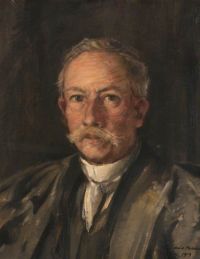
Portrait of Hans Friedrich Gadow Hans Friedrich Gadow 1911 Encyclopædia Britannica, Volume 10… (1911)

Then the bird erects its long neck to swallow the selected food. When flying, flamingos present a striking and beautiful sight, with legs and neck stretched out straight, looking like white and rosy or scarlet crosses with black arms. Not less fascinating is a flock of these sociable birds when at rest, standing on one or both legs, with their long necks twisted or coiled upon the body in any conceivable position.
The nest is likewise peculiar. It is built of mud, a somewhat conical structure rising above the water according to the depth, of which the cone is from a few inches to 2 ft.
Source: Wikisource

Portrait of Hans Friedrich Gadow Hans Friedrich Gadow 1911 Encyclopædia Britannica, Volume 10… (1911)

The food of the flamingo seems to consist chiefly of small aquatic invertebrate animals which live in the mud of lagoons, for instance Mollusca, but also of Confervae and other low salt-water algae. Whilst feeding, the bird wades about, stirs up the mud with its feet, and, reversing the ordinary position of its head so as to hold the crown downwards and to look backwards, sifts the mud through its bill.
Source: Wikisource

Portrait of Hans Friedrich Gadow Hans Friedrich Gadow 1911 Encyclopædia Britannica, Volume 10… (1911)

The young, which are hatched after about four weeks’ incubation, look very different from the adult. The small bill is still quite straight and the legs are short. The whole body is covered with a thick coat of short nestling feathers, pure white in colour. These neossoptiles or first feathers bear no resemblance to those of the Anseriform birds, but agree in detail with those of spoonbills, the young of which the little flamingos resemble to a striking extent, but they leave the nest soon after their birth to shift for themselves like ducks and geese.
Source: Wikisource

Get perspective with Kwize: daily news enlightened by great literature