Summary

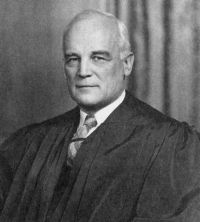
Portrait of Harold Hitz Burton Harold Hitz Burton Griffin v. Illinois — Dissent

Some can afford better lawyers and better investigations of their cases. Some can afford bail, some cannot. Why fix bail at any reasonable sum if a poor man can't make it?
The Constitution requires the equal protection of the law, but it does not require the States to provide equal financial means for all defendants to avail themselves of such laws.
Source: Wikisource

Portrait of Harold Hitz Burton Harold Hitz Burton Griffin v. Illinois — Dissent

Whether the Illinois statute denies equal protection depends upon whether, first, it is an arbitrary and unreasonable distinction for the legislature to make, between those convicted of a capital offense and those convicted of a lesser offense, as to their right to a free transcript. It seems to us the whole practice of criminal law teaches that there are valid distinctions between the ways in which criminal cases may be looked upon the treated without violating the Constitution. Very often we have cases where the convicted seek only to avoid the death penalty.
Source: Wikisource

Portrait of Harold Hitz Burton Harold Hitz Burton Griffin v. Illinois — Dissent

Secondly, certainly Illinois does not deny equal protection to convicted defendants when the terms of appeal are open to all, although some may not be able to avail themselves of the full appeal because of their poverty. Illinois is not bound to make the defendants economically equal before its bar of justice. For a State to do so may be a desirable social policy, but what may be a good legislative policy for a State is not necessarily required by the Constitution of the United States. Persons charged with crimes stand before the law with varying degrees of economic and social advantage.
Source: Wikisource

Get perspective with Kwize: daily news enlightened by great literature