Summary

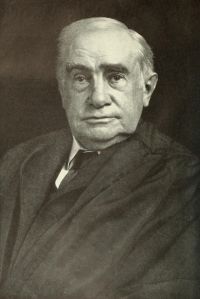
Portrait of Henry Billings Brown Henry Billings Brown American Net Twine Company v. Worthington…

But these qualities are not essential to twine, which is defined by Webster as 'a strong thread, composed of two or three smaller threads or strands twisted together, and used for various purposes, as for binding small parcels, making nets, and the like; a small cord or string.' If in fact twine were necessarily stiff, and contained an infusion of gum, there could be no such thing as 'gilling twine,' since, for the purpose of gillnets, linen thread must combine the utmost possible flexibility of movement with lightness of texture, strength, and invisibility.
Source: Wikisource

Portrait of Henry Billings Brown Henry Billings Brown American Net Twine Company v. Worthington…

It is a cardinal rule of this court that, in fixing the classification of goods for the payment of duties, the name or designation of the goods is to be understood in its known commercial sense, and that their denomination in the market when the law was passed will control their classification without regard to their scientific designation, the material of which they may be made, or the use to which they may be applied.
Source: Wikisource

Portrait of Henry Billings Brown Henry Billings Brown American Net Twine Company v. Worthington…

The argument for the higher duty is based upon the finding that the article is not twine, is not suitable for the purposes to which twine is commonly put, because made of flax from which the gum has been removed by boiling, and is flexible, without the stiffness of twine, highly finished, capable of being used for sewing, and largely used for machine sewing in many trades.
Source: Wikisource

Get perspective with Kwize: daily news enlightened by great literature