Summary

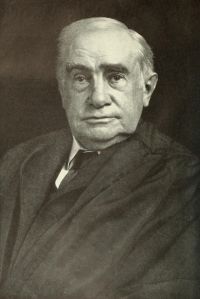
Portrait of Henry Billings Brown Henry Billings Brown Arnold v. Hatch — Opinion of the Court

The son was undoubtedly intrusted with extensive powers, but no greater than the management of a large farm would necessarily require. The father had become an old man, and naturally wished to rid himself of the responsibility, even of supervision, and to put his son upon the footing of an independent farmer. It is possible that he contemplated leaving the property to his son upon his death; but it was clearly his intention to reserve the power of revoking the arrangement in case it did not prove satisfactory to him.
Source: Wikisource

Portrait of Henry Billings Brown Henry Billings Brown Arnold v. Hatch — Opinion of the Court

Here there was no provision for a substituted property beyond that required by the nature of the property delivered. The arrangement was to be indefinite in its continuance. The property was mostly animals which would necessarily die, be sold, or slaughtered in a few years, and a gradual substitution of their progeny or other similar cattle and a renewal of worn-out implements was all that was contemplated. The stipulation that this might be done was a mere incident of the main agreement by which the property was to be returned in like good order and condition as received.
Source: Wikisource

Portrait of Henry Billings Brown Henry Billings Brown Arnold v. Hatch — Opinion of the Court

The undisputed facts are that, in 1883, the petitioner, Lewis Hatch, who then and for about twenty-five years prior thereto, had resided upon and worked a large farm in McHenry county, Illinois, made a contract with his son, Frank W. Hatch, a young man just out of school, under which it was agreed that the latter should undertake the management of the farm, farm implements, and live stock, make all repairs, pay all taxes and other expenses, replace all implements as they were worn out, keep up all live stock, and have as his own the net profits.
Source: Wikisource

Get perspective with Kwize: daily news enlightened by great literature