Summary

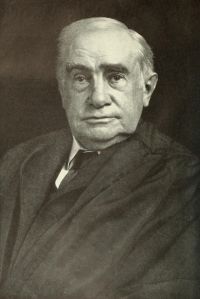
Portrait of Henry Billings Brown Henry Billings Brown Moore v. Ruckgaber — Opinion of the Court

The question, then, is whether the condition is changed if the property pass under a will executed in this country. In United States v. Hunnewell, 13 Fed. 617, cited in the preceding case, the will was executed in France, but the decision of Mr. Justice Gray, holding that the tax was not payable, was not put upon the ground that the will was executed in a foreign country, but upon the broader ground that the legacy duty was payable only upon the estate of persons domiciled within the United States.
Source: Wikisource

Portrait of Henry Billings Brown Henry Billings Brown Moore v. Ruckgaber — Opinion of the Court

Property of the same kind, situated in the same place, receiving the same protection from the law, and administered upon in the same way, would naturally be required to contribute toward the expense of government upon the same basis, regardless of whether its last owner died testate or intestate.' By parity of reasoning, we think it follows that no discrimination was intended to be made between nonresidents who died testate, even though the will were made in this country, and those who died intestate
Source: Wikisource

Portrait of Henry Billings Brown Henry Billings Brown Moore v. Ruckgaber — Opinion of the Court

In delivering the opinion he observed: 'Section 124 [of the similar act of 1864] imposes a duty on legacies or distributive shares arising from personal property 'passing from any person possessed of such property, either by will or by the intestate laws of any state or territory;' it does not make the duty payable when 'the person possessed of such property' dies testate, if it would not be payable if such person died intestate
Source: Wikisource

Get perspective with Kwize: daily news enlightened by great literature