Summary

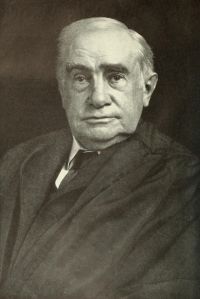
Portrait of Henry Billings Brown Henry Billings Brown Bogk v. Gassert — Opinion of the Court

A defendant has an undoubted right to stand upon his motion for a nonsuit, and have his writ of error, ror, if it be refused; but he has no right to insist upon his exception after having subsequently put in his testimony, and made his case upon the merits, since the court and jury have the right to consider the whole case as made by the testimony. It not infrequently happens that the defendant himself, by his own evidence, supplies the missing link; and, if not, he may move to take the case from the jury upon the conclusion of the entire testimony.
Source: Wikisource

Portrait of Henry Billings Brown Henry Billings Brown Bogk v. Gassert — Opinion of the Court

Neither of the defendants ever paid anything on the lands, and neither exercised the option of repurchasing, and their rights had thus become forfeited. Defendant answered, admitting the deed and contract, but alleging that, taken together, they were understood by the parties as constituting a mortgage for the security of the money received by him at that time, which was in reality a loan, and that the transaction was to avoid the effect of the usury laws of lowa. He therefore prayed for a right to redeem.
Source: Wikisource

Portrait of Henry Billings Brown Henry Billings Brown Bogk v. Gassert — Opinion of the Court

Now, while this might have been improper as original testimony, it would have been manifestly unfair to permit Bogk to give his version of the transaction, gathered from conversation between the parties, and to deny the plaintiffs the privilege of giving their version of it. The defendant himself, having thrown the bars down, has evidently no right to object to the plaintiffs having taken advantage of the license thereby given to submit to the jury their understanding of the agreement.
Source: Wikisource

Get perspective with Kwize: daily news enlightened by great literature