Summary

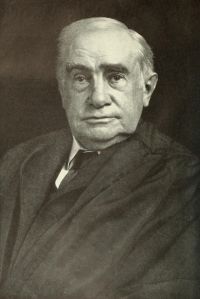
Portrait of Henry Billings Brown Henry Billings Brown Browning v. De Ford — Opinion of the Court

If, as the evidence had some tendency to show, they actively participated in the fraud, their position is even worse.
It is consonant neither with good morals nor sound sense to hold that one may take a mortgage upon the property of another, which he knows to have been fraudulently acquired, and to which the purchaser has no valid title, whether the vendor elect to pursue the purchaser by a retaking of the property, or by an action for the price and an attachment of the property to secure the debt.
Source: Wikisource

Portrait of Henry Billings Brown Henry Billings Brown Browning v. De Ford — Opinion of the Court

If the attaching creditors rescind the sale and sue in replevin, the mortgagees, having knowledge of the fraudulent purchase, are in the position of taking a mortgage upon property to which they knew the mortgagor had no title. If, upon the other hand, the creditors proceed by attachment, the mortgagees, knowing that the goods were fraudulently purchased, stand in the position of taking advantage themselves of the debtor's fraud, and obtaining a preference to which they are not justly entitled.
Source: Wikisource

Portrait of Henry Billings Brown Henry Billings Brown Browning v. De Ford — Opinion of the Court

Shortly after the execution of the mortgage, a number of other creditors brought suits in attachment against Wolfe & Son, and through the defendant De Ford, sheriff of Oklahoma county, levied upon the goods, and dispossessed the mortgagees, who brought suits for the conversion of the property. These suits were subsequently consolidated into two cases, in one of which all the mortgage creditors appear as plaintiffs, and the sheriff of Oklahoma county as defendant.
Source: Wikisource

Get perspective with Kwize: daily news enlightened by great literature