Summary

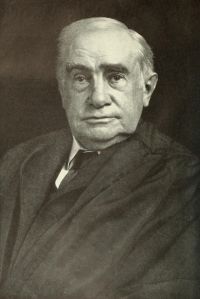
Portrait of Henry Billings Brown Henry Billings Brown Giles v. Heysinger — Opinion of the Court

It is evident that if Mills and Hershey had been the first to use the process described in this patent, of immersing the bare metal in a bath of dextrine, and then covering it with a fibrous coating, the double-cover process of Blakesley would have been an infringement. The intervention of a loose cotton covering between the outer braid and the bare metal would have been treated simply as an evasion.
Source: Wikisource

Portrait of Henry Billings Brown Henry Billings Brown Giles v. Heysinger — Opinion of the Court

If the meshes of the cotton were loose or open, the adhesion of the core would be amply sufficient to prevent the fraying out, which it was the object of the patent to accomplish. The bath of dextrine was the essential feature of both devices, and, even if the double cover were-less efficient than the other, it required no exercise of the inventive faculty to omit the cotton cover, and immerse the bare metal.
Source: Wikisource

Portrait of Henry Billings Brown Henry Billings Brown Giles v. Heysinger — Opinion of the Court

I then conducted the cotton-braided strip through the silk braider, applying a cover of silk. The cotton-covered strip was conducted through a dish of dextrine under a roller journaled in the dish; thence to pair of stripping rolls situated between the dish and the braider; this dextrine saturating the cotton thoroughly throughout its length, the stripping rolls depriving it of the surplus cement, leaving it wet and thoroughly saturated, and wet enough to receive the silk covering and cement it, so that all three-core, cotton cover, and silk cover-were cemented together.
Source: Wikisource

Get perspective with Kwize: daily news enlightened by great literature