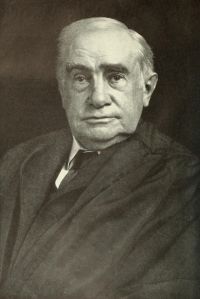
 Henry Billings Brown,
Goode v. United States — Opinion of the Court
Henry Billings Brown,
Goode v. United States — Opinion of the Court
“ It makes no difference with respect to the duty of the carrier whether the letter be genuine or a decoy, with a fictitious address. Coming into his possession as such carrier, it is his duty to treat it for what it appears to be on its face,-a genuine communication; to make an effort to deliver it; or, if the address be not upon his route, to hand it to the proper carrier, or put it into the list box. Certainly, he has no more right to appropriate it to himself than he would have if it were a genuine letter. ”
