Summary

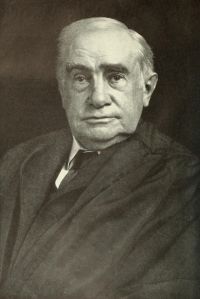
Portrait of Henry Billings Brown Henry Billings Brown Hale v. Ledyard — Opinion of the Court

Passing the question whether a party who failed to set up a Federal question in his original pleadings, or upon his first appeal to the supreme court, and subsequently declines to amend, and only sets such question up in an assignment of errors on a second appeal, after the question had been practically disposed of by the supreme court, does not lay himself open to the objection so often sustained by us that a party cannot raise a Federal question for the first time on a motion for a rehearing.
Source: Wikisource

Portrait of Henry Billings Brown Henry Billings Brown Hale v. Ledyard — Opinion of the Court

Upon this appeal the supreme court held that the principal question presented was as to the construction, validity, and effect of the law of Wisconsin requiring such associations to make a deposit of securities as a condition to doing business, and decided, first that the mortgages in dispute were deposited with the state treasurer by the corporation in a bona fide attempt to comply with the Wisconsin law; that it was its duty and within the power of its directors to make such deposits, as a condition precedent to the right to do business in Wisconsin
Source: Wikisource

Portrait of Henry Billings Brown Henry Billings Brown Hale v. Ledyard — Opinion of the Court

And, second, that whatever the view taken of the rights and relations of the entire body of stockholders as between themselves and the corporation, the contract clause of the Constitution could not be invoked to release these securities from the operation of the statute, as the stockholders had waived their right to insist upon the constitutional objection by the voluntary act of the board of directors in making the deposit with the state treasurer under the statute.
Source: Wikisource

Get perspective with Kwize: daily news enlightened by great literature