Summary

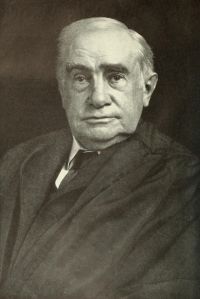
Portrait of Henry Billings Brown Henry Billings Brown Keely v. Moore — Opinion of the Court

But here the certificate was a wholly unofficial act, and we see no objection to disregarding the words 'Vice Consul of the United States,' and treating it as an acknowledgment of the execution before a competent witness. The acknowledgment of a will is really a feature of the attestation. The statute did not require that the devisor should sign the will in the presence of the witness, but that the witness should sign in the presence of the testator.
Source: Wikisource

Portrait of Henry Billings Brown Henry Billings Brown Keely v. Moore — Opinion of the Court

Conceding the general rule to be that witnesses must intend to attest the will as witnesses, the inference is strong that Cooksey did so in this case, as he certifies to the genuineness of the signature of Thomson and to the acknowledgment of the will in his presence; and these are what would have been required by the law of this District had the instrument been a deed. It is argued that Cooksey did not intend to attest the will, but merely to sign the certificate; but the certificate of what? Only the fact that the will was acknowledged in his presence and that the signature was genuine.
Source: Wikisource

Get perspective with Kwize: daily news enlightened by great literature