Summary

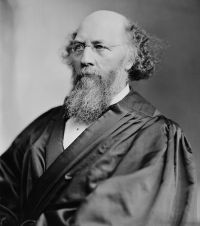
Portrait of Stephen Johnson Field Stephen Johnson Field Carpenter v. Dexter — Opinion of the Court

If this be the correct interpretation of the statute, we answer that the certificate to the deed in question did, in substance, conform, when read in connection with the deed itself, to the requirements of that law. In aid of the certificate reference may be had to the instrument itself, or to any part of it. It is the policy of the law to uphold certificates when substance is found, and not to suffer conveyances, or the proof of them, to be defeated by technical or unsubstantial objections.
Source: Wikisource

Portrait of Stephen Johnson Field Stephen Johnson Field Carpenter v. Dexter — Opinion of the Court

As it now stands, it is as vague and pointless as would be a general objection to either party's right of recovery. If the proof against the infant heirs was not as full as a due regard for their rights should have exacted, it will be time for us to consider that matter, when they, or parties representing them, are before the court. It is not a matter which defeated the jurisdiction of the local tribunal in the partition, and it is not a matter of any concern to the defendant, who was a stranger to, and in no way interested in, the proceeding.
Source: Wikisource

Portrait of Stephen Johnson Field Stephen Johnson Field Carpenter v. Dexter — Opinion of the Court

The law of Illinois in force in 1847, upon the manner of taking acknowledgments, provides that no officer shall take the acknowledgment of any person, unless such person 'shall be personally known to him to be the real person who [executed the deed] , and in whose name such acknowledgment is proposed to be made, or shall be proved to be such by a credible witness,' and such personal knowledge, or proof, shall be stated in the certificate.
Source: Wikisource

Get perspective with Kwize: daily news enlightened by great literature