Summary

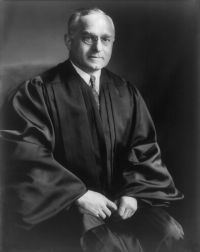
Portrait of Felix Frankfurter Felix Frankfurter New York v. O'Neill — Opinion of the Court

The Constitution of the United States does not preclude resourcefulness of relationships between States on matters as to which there is no grant of power to Congress and as to which the range of authority restricted within an individual State is inadequate. By reciprocal, voluntary legislation the States have invented methods to accomplish fruitful and unprohibited ends. A citizen cannot shirk his duty, no matter how inconvenienced thereby, to testify in criminal proceedings and grand jury investigations in a State where he is found.
Source: Wikisource

Portrait of Felix Frankfurter Felix Frankfurter New York v. O'Neill — Opinion of the Court

To hold that these and other arrangements are beyond the power of the States and Federal Government because there is no specific empowering provision in the United States Constitution would be to take an unwarrantedly constricted view of state and national powers and would hobble the effective functioning of our federalism. Diffusion of power has its corollary of diffusion of responsibilities with its stimulus to cooperative effort in devising ways and means for making the federal system work.
Source: Wikisource

Portrait of Felix Frankfurter Felix Frankfurter New York v. O'Neill — Opinion of the Court

The privilege of ingress and egress among the States which has been urged in opinions is of hardier stuff. The privilege was to prevent the walling off of States, what has been called the Balkanization of the Nation. The requirement which respondent resists conduces, it merits repetition, toward a free-willed collaboration of independent States.
The more relevant challenge to the statute invalidated by the Supreme Court of Florida is that it denies due process of law in violation of the Fourteenth Amendment.
Source: Wikisource

Get perspective with Kwize: daily news enlightened by great literature