Summary

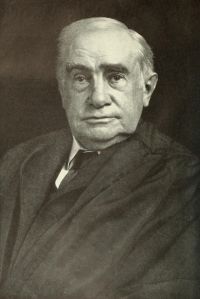
Portrait of Henry Billings Brown Henry Billings Brown Patterson v. Hewitt — Opinion of the Court

If an action be brought the day before the statutory time expires, it will be sustained; if the day after, it will be defeated. In suits in equity the question is determined by the circumstances of each particular case. The statute of limitations consorts with the rigid principles of the common law, but is ill adapted to the flexible remedies of a court of equity. The statute frequently works great practical injustice,-the doctrine of laches, never. True, lapse of time is one of the chief ingredients, but there are others of almost equal importance.
Source: Wikisource

Portrait of Henry Billings Brown Henry Billings Brown Patterson v. Hewitt — Opinion of the Court

There is no class of property more subject to sudden and violent fluctuations of value than mining lands. A location which to-day may have no salable value may in a month become worth its millions. Years may be spent in working such property, apparently to no purpose, when suddenly a mass of rich ore may be discovered, from which an immense fortune is realized. Under such circumstances, persons having claims to such property are bound to the utmost diligence in enforcing them, and there is no class of cases in which the doctrine of laches has been more relentlessly enforced.
Source: Wikisource

Portrait of Henry Billings Brown Henry Billings Brown Patterson v. Hewitt — Opinion of the Court

In a few cases where the statute of limitations is made applicable in terms to suits in equity, it has been construed as allowing a suit to be begun at any time within the period limited by the statute, notwithstanding the intermediate laches of the complainant, although in those cases it will usually be found that the language of the statute is explicit and imperative.
Source: Wikisource

Get perspective with Kwize: daily news enlightened by great literature