Summary

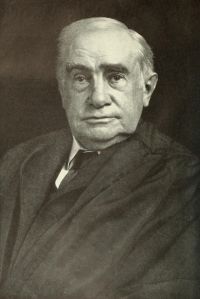
Portrait of Henry Billings Brown Henry Billings Brown Patton v. United States (159 U.S. 500…

Unless natural waste can be treated as a manufacture, artificial waste should not.
The clause in the tariff act covering these manufactures imposed both a specific and an ad valorem duty upon 'woolen cloths, woolen shawls, and all manufactures of wool of every description.' Applying the rule, 'Noscitur a sociis,' it can hardly be supposed that wool used for the purpose of waste, and as an adulterant in the manufacture of cloths, was to be included in the same designation as woolen cloths and shawls, which evidently refer to articles made of wool, and having a separate designation of their own.
Source: Wikisource

Portrait of Henry Billings Brown Henry Billings Brown Patton v. United States (159 U.S. 500…

In the process of making the tops, short ends of wool are produced, which are called and sold in the trade as 'Botany laps' or 'Botany waste,' the two terms being synonymous in the English market. After the top is produced, it sometimes happens that it is shorter in staple than was anticipated, or not of the proper color, or that it has to be recarded, to get out the burrs, or for some other reason it becomes unmerchantable.
Source: Wikisource

Portrait of Henry Billings Brown Henry Billings Brown Patton v. United States (159 U.S. 500…

The first assignment of error is that which is taken to the instruction to the jury that the importation in question, though called 'wool waste,' seems to be so called only because of its resemblance to what was formerly known by this designation; that it does not consist of refuse or broken particles thrown off in the process of manufacture, but is made intentionally by tearing up what are called 'wool tops,' which consist of wool which has been put through several processes and prepared for spinning
Source: Wikisource

Get perspective with Kwize: daily news enlightened by great literature