Summary

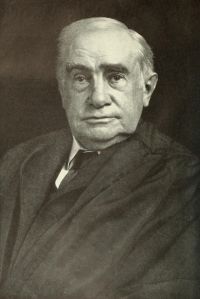
Portrait of Henry Billings Brown Henry Billings Brown Scott v. Donald (165 U.S. 58)/Dissent Brown…

It is entirely well settled that the unconstitutionality of a particular provision will not invalidate an entire statute, unless such provision embodies the main purpose of the statute, or is so connected with such purpose that it is inseparable from it, or unless the court can see that the legislature would not have passed the act without such provision.
Source: Wikisource

Portrait of Henry Billings Brown Henry Billings Brown Scott v. Donald (165 U.S. 58)/Dissent Brown…

Granting that the act gives the state itself a monopoly of all traffic in such liquors, it is not a monopoly in the ordinary or odious sense of the term, where one individual or corporation is given the right to manufacture or trade which is not open to others, but a monopoly for the benefit of the whole people of the state, the profits of which, if any, are enjoyed by the whole people; in short, a monopoly in the same sense in which the post-office department, and the right to carry the mails, is a monopoly of the federal government.
Source: Wikisource

Portrait of Henry Billings Brown Henry Billings Brown Scott v. Donald (165 U.S. 58)/Dissent Brown…

The manifest dangers to the future of the country which lurk in the inflexibility of the federal constitution can only be averted by carefully distinguishing between such laws as practically concern the inhabitants of a particular state only, and are intended bona fide for their welfare, and such as are a mere subterfuge for an unlawful discrimination, and cannot be carried into effect without doing palpable injustice to citizens of other states.
Source: Wikisource

Get perspective with Kwize: daily news enlightened by great literature