Summary

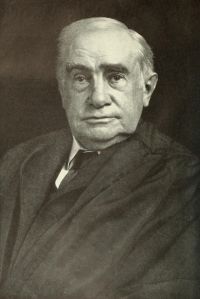
Portrait of Henry Billings Brown Henry Billings Brown The Carib Prince/Dissent Brown…

The question then arises as to what was meant by the exception of 'latent defects.' It evidently was not intended to refer to defects which became such after the beginning of the voyage through stress of weather or other perils of the sea, since the ship would not be liable for such defects or breakages, whether excepted or not in a bill of lading. A ship is never liable for an accident or breakage of machinery occasioned by perils of the sea, and the word 'defects' is never used in that connection.
Source: Wikisource

Portrait of Henry Billings Brown Henry Billings Brown The Carib Prince/Dissent Brown…

Bills of lading, under which the cargo was shipped, contained, among other excepted perils, the clauses 'warranted seaworthy only so far as ordinary care can provide,' and 'owners not to be liable for loss, detention, or damage * * * if arising directly or indirectly * * * from latent defects in boilers, machinery, * * * even existing at time of shipment.' The Laertes broke down from a latent defect, which could not have been discovered by the exercise of all reasonable care
Source: Wikisource

Portrait of Henry Billings Brown Henry Billings Brown The Carib Prince/Dissent Brown…

While it is possible that the framers of this act may have intended to exonerate ships from the consequences of unseaworthiness where due diligence had been used to make them seaworthy, it must be conceded that the language of the third section does not express such intent, since it only exonerates them from loss or damage resulting from faults or errors in navigation or management.
Source: Wikisource

Get perspective with Kwize: daily news enlightened by great literature