Summary

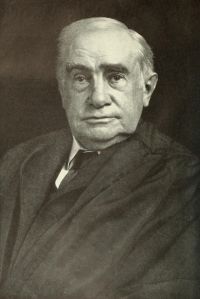
Portrait of Henry Billings Brown Henry Billings Brown Tide-Water Oil Company v. United States…

It may be said generally, although not universally, that a complete manufacture is either the ultimate product of prior successive manufactures, such as a watchspring or a penknife, or an intermediate product which may be used for different purposes, such, for instance, as pig iron, iron bars, lumber, or cloth; while a partial manufacture is a mere stage in the development of the material towards an ultimate and predestined product,-such, for instance, as the different parts of a watch, which need only to be put together to make the finished article.
Source: Wikisource

Portrait of Henry Billings Brown Henry Billings Brown Tide-Water Oil Company v. United States…

It is not always easy to determine the difference between a complete and a partial manufacture, but we may say generally that an article which can only be used for a particular purpose, in which the process of manufacture stops short of the completed article, can only be said to be partially manufactured within the meaning of this section; nor can we regard the mere assembling and nailing together of parts complete in themselves, and destined for a particular purpose, as a complete and separate manufacture.
Source: Wikisource

Portrait of Henry Billings Brown Henry Billings Brown Tide-Water Oil Company v. United States…

It is quite improbable that congress intended to allow a drawback upon the nine-tenths represented by the Canadian material for the benefit of the one-tenth represented by the labor put upon the boxes in this country. What was doubtless meant was to allow this drawback upon articles manufactured wholly and bona fide within the United States, either from the raw material, or from material which was the result of the last complete manufacture.
Source: Wikisource

Get perspective with Kwize: daily news enlightened by great literature