Summary

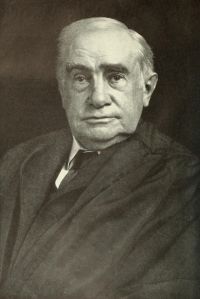
Portrait of Henry Billings Brown Henry Billings Brown United States Fidelity Guaranty Company v…

In an ordinary guaranty the guarantor understands perfectly the nature and extent of his obligation. If he becomes surety for the performance of a building contract, he is presumed to know the parties, the terms of their undertaking, the extent and feasibility of the work to be done, the character and responsibility of the principal obligor, and his ability to carry out the contract. If he guarantees the payment of a particular debt, he usually knows the exact amount of the debt, the time when it matures, and something of the ability of the principal to meet it.
Source: Wikisource

Portrait of Henry Billings Brown Henry Billings Brown United States Fidelity Guaranty Company v…

In this covenant the surety guarantees nothing to the principal obligee, the government,-though the latter permits an action upon the bond for the benefit of the subcontractors. The covenant is made solely for their benefit. The guarantor is ignorant of the parties with whom his principal may contract, the amount, the nature, and the value of the materials required, as well as the time when payment for them will become due.
Source: Wikisource

Portrait of Henry Billings Brown Henry Billings Brown United States Fidelity Guaranty Company v…

The rule of strictissimi juris a stringent one, and is liable at times to work a practical injustice. It is one which ought not to be extended to contracts not within the reason of the rule, particularly when the bond is underwritten by a corporation which has undertaken for a profit to insure the obligee against a failure of performance on the part of the principal obligor.
Source: Wikisource

Get perspective with Kwize: daily news enlightened by great literature